How to Reset Engine Light on Car in 5 Easy Steps
How to Reset Engine Light? If you’ve ever seen that stubborn light pop up on your dashboard, you know how frustrating it can be. You’re not alone—many drivers struggle to figure out how to reset the engine light without a costly trip to the mechanic.
Whether it’s a minor glitch or something more serious, knowing how to reset your car’s engine light can save you time and stress.
To reset your car’s engine light, first make certain your vehicle is parked safely with the engine off and the gas cap tightly secured.
Next, plug an OBD-II scanner into the port under the dashboard and turn the ignition on.
Use the scanner to read and clear the trouble codes.
If you prefer, disconnect the negative battery terminal for 15 minutes, then reconnect and restart the car.
Keep an eye out for recurring lights, as they may signal deeper issues you’ll want to investigate further.
How to Reset Engine Light Key Takeaways
- Park the car safely, turn off the engine, and make sure the gas cap is tightly closed.
- Connect an OBD-II scanner to the port under the dashboard, then turn the ignition to “on.”
- Use the scanner to read and clear the engine trouble codes. This will reset the light.
- You can also disconnect the negative battery terminal for 15 minutes to reset the system manually.
- If the light comes back on, scan for codes again and address any underlying issues or consult a mechanic.
Why Is My Engine Light On? How to Diagnose the Problem
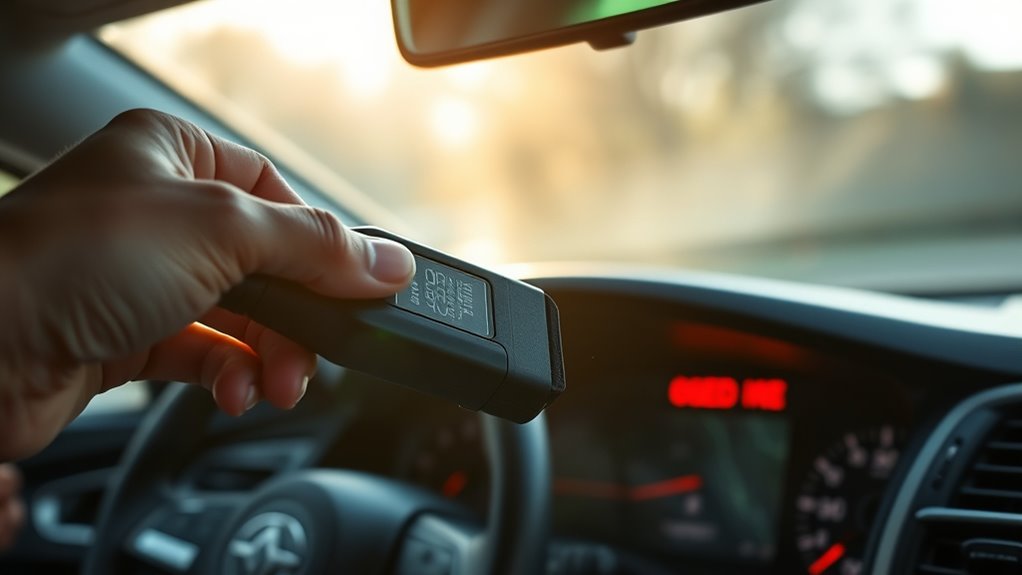
Although seeing your engine light come on can be alarming, it doesn’t always mean there’s a serious problem. The engine warning light is part of your dashboard indicators, designed to alert you when your car’s computer detects an issue. It could be something as simple as a loose gas cap or a minor sensor glitch.
To diagnose the problem, start by checking if any other dashboard indicators are lit or flashing. These can give you clues about the issue’s nature.
Next, use an OBD-II scanner to read the trouble codes stored in your car’s computer. This tool pinpoints the exact problem, whether it’s related to emissions, ignition, or fuel systems.
Get Your Car Ready to Reset the Engine Light
Before you reset the engine light, make sure your car is parked safely with the engine turned off and the parking brake engaged. This step guarantees you won’t accidentally move the vehicle while working on it.
Next, check your dashboard indicators to confirm the engine light is still on and note any other warning lights. This gives you a clearer picture of your car’s condition.
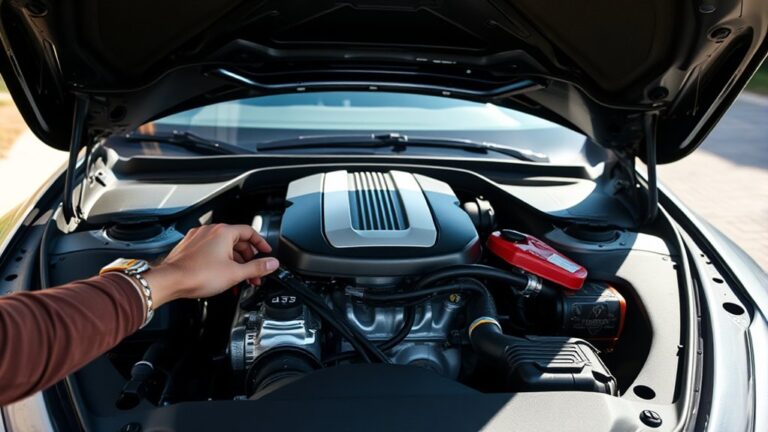
Good car maintenance habits include inspecting under the hood for obvious issues like loose wires or low fluid levels. Addressing simple problems before resetting the light can prevent it from coming back on immediately.
Also, verify your gas cap is tightened properly, as a loose cap often triggers the engine light. Taking these precautions helps you prepare your car effectively and avoids unnecessary resets.
Once you’ve done these checks, you’ll be ready to proceed confidently with resetting the engine light.
Reset the Engine Light Using an OBD-II Scanner
When you want to reset the engine light quickly and accurately, using an OBD-II scanner is one of the best methods. The engine light symbolism can be confusing, but this tool reads the exact trouble codes stored in your car’s computer, helping you understand why the light came on.
First, plug the OBD-II scanner into the port under your dashboard. Turn your ignition to the “on” position without starting the engine. The scanner will communicate with your vehicle’s system, displaying codes and descriptions.
After reviewing the codes, you can clear them with the scanner’s reset function. This not only turns off the engine light but also resets the system, allowing your car to monitor itself again.
The OBD II scanner benefits include saving time, providing precise diagnostics, and avoiding unnecessary repairs. Using this tool guarantees you address the real issue rather than just hiding the warning.
Reset the Engine Light by Disconnecting the Battery
If you want a straightforward way to reset your engine light without specialized tools, disconnecting the battery can do the trick. This method clears the engine diagnostics memory, turning off the light temporarily.
Before you start, make sure your car is off, then disconnect the negative battery terminal. Wait about 15 minutes to let the system reset, then reconnect it. Keep in mind, this also resets other electronic settings, so you might need to reprogram your radio or clock.
Here’s a quick overview of this method and its impact:
| Step | Effect on Engine Diagnostics | Battery Maintenance Tip |
|---|---|---|
| Disconnect negative terminal | Clears error codes | Use gloves to avoid corrosion |
| Wait 15 minutes | Resets engine light | Check battery voltage |
| Reconnect terminal | System restarts | Clean terminals if needed |
| Restart car | Light should be off | Monitor battery performance |
This simple battery maintenance step can help reset your engine light efficiently.
Troubleshooting: What to Do If the Engine Light Comes Back
Disconnecting the battery often clears the engine light temporarily, but the light may come back if the underlying issue isn’t resolved. If this happens, start by checking your car’s oil level, as low oil can trigger the warning. Make sure it’s at the proper level and top it off if needed.
Next, consider a sensor malfunction; faulty sensors often cause the light to return. Using an OBD-II scanner can help you identify specific error codes related to sensor issues, such as problems with oxygen or mass airflow sensors.
Once you pinpoint the problem, you can decide whether to fix it yourself or take your car to a mechanic. Ignoring the recurring light could lead to more severe engine damage. So, don’t just reset the light. Diagnose and address the root cause to keep your car running smoothly.
Frequently Asked Questions
Can Resetting the Engine Light Affect My Car’s Warranty?
Yes, resetting the engine light can have warranty implications if done improperly. If you reset the light without fixing the underlying issue, it might void parts of your warranty, especially related to emissions or engine performance.
Manufacturers expect you to follow proper resetting procedures and repair guidelines. Always check your warranty terms before resetting, and consider having a professional handle it to avoid risking coverage or missing critical diagnostics.
How Often Should I Reset the Engine Light?
You should reset the engine light only after addressing the problem causing it. Dashboard indicators and maintenance reminders exist to alert you of issues or needed service, so don’t ignore them.
Resetting the light too often without fixing the root cause can mask serious problems. Once repairs are complete and the issue is resolved, you can reset the light to clear the dashboard indicators and stay on top of maintenance reminders.
Will Resetting the Engine Light Improve Fuel Efficiency?
Resetting the engine light won’t directly improve your fuel economy. Think of it like turning off a warning sign; it doesn’t fix the underlying problem affecting your car’s performance.
If your engine light is on due to an issue, ignoring it can lead to poor fuel economy and might cause your vehicle to fail emissions testing.
To truly boost efficiency, you need to diagnose and repair the root cause, not just reset the light.
Can I Reset the Engine Light on All Car Models?
You can’t reset the engine light on all car models the same way because dashboard warnings and oil indicator systems vary. Some cars let you reset the light using buttons or your OBD-II scanner, while others require professional tools.
If the engine light or oil indicator stays on after you fix the issue, resetting might work. But always check your owner’s manual or consult a mechanic to avoid causing more problems.
Does Resetting the Engine Light Erase Other Car Data?
Resetting the engine light gently clears some dashboard indicators but doesn’t wipe out all your car’s memories. When you reset, you erase certain engine diagnostics codes, which helps the light turn off.
But deeper data like adaptive learning and maintenance history usually stays intact. So, you’re giving your dashboard a fresh start without erasing the valuable insights your car’s system has collected over time.
Conclusion
Resetting your engine light is like clearing a fogged windshield; it lets you see clearly again. By diagnosing the cause, preparing your car, and using tools like an OBD-II scanner or disconnecting the battery, you take control of your vehicle’s health.
Remember, if the light returns, it’s a signal, not just a warning. Treat it as a guide steering you toward safer journeys and a stronger engine. Resetting the engine light properly helps you maintain your car’s performance and safety.