How to Reset a Car Check Engine Light in 10 Easy Steps
Dealing with a stubborn check engine light can be really frustrating, and you’re definitely not alone. Many people struggle with understanding what triggers this warning and how to get it to turn off without endless trips to the mechanic.
If you want a simple way to reset your car’s check engine light, you’re in the right place.
To reset your car’s check engine light, first use an OBD-II scanner to read and fix the trouble codes causing the alert. After repairs, clear the codes with the scanner or disconnect the battery for 15 minutes to reset the system.
You can also try turning the ignition on and off 3–5 times or complete several driving cycles for the light to turn off automatically.
If it stays on, deeper issues might need professional help.
Keep exploring for detailed steps and precautions.
Key Takeaways
- Use an OBD-II scanner to read and clear trouble codes from the vehicle’s computer quickly and easily.
- Check and tighten the gas cap before attempting any reset to rule out simple causes.
- Disconnect the car battery for 15 minutes to reset the vehicle’s computer memory if no scanner is available.
- Perform multiple driving cycles with varied speeds to allow the onboard computer to run self-tests and reset the light.
- If the light stays on or flashes, consult a mechanic to diagnose and fix underlying issues before resetting again.
How to Check Why the Check Engine Light Came On
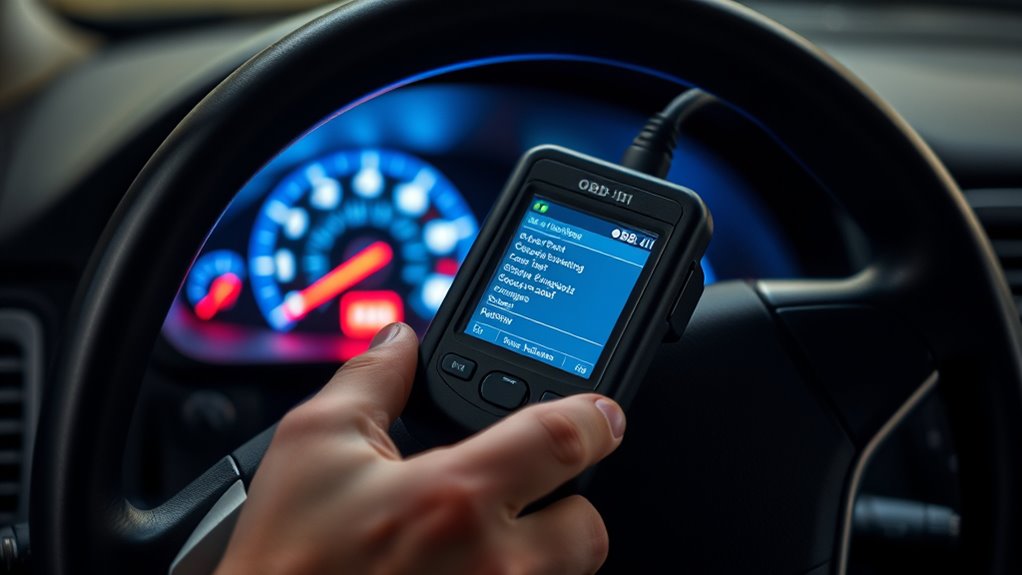
Before you reset your check engine light, you need to find out why it came on in the first place. Ignoring the cause can lead to reduced fuel efficiency or even violate emission standards, costing you more in the long run.
Start by using an OBD-II scanner to read the trouble codes stored in your car’s computer. These codes pinpoint the exact issue, whether it’s a loose gas cap, faulty oxygen sensor, or something more serious.
You can buy an affordable scanner or visit a mechanic who can diagnose the problem for you. Once you know the cause, you can address it directly to improve your vehicle’s performance and ensure it meets emission standards.
Avoid resetting the light without fixing the issue, as this won’t solve the underlying problem and might cause further damage or inefficient fuel use. Checking the reason behind the warning light is the crucial first step toward a safer, more efficient drive.
Quick Ways to Reset Your Check Engine Light
If your check engine light won’t turn off even after you’ve fixed the issue, don’t worry—you’ve got a few quick reset options to try. One popular way is using an OBD-II scanner to clear the codes; it’s pretty straightforward and gets the job done fast.
Alternatively, you can disconnect the battery for a short time. Just be careful with this method since it might reset other settings in your car.
Another option is to simply complete a driving cycle. Sometimes, the system needs a little time and miles to recognize that everything’s back to normal.
All in all, these methods offer easy ways to take control and get that pesky light turned off.
Using An OBD-II Scanner
Wondering how to quickly clear your car’s check engine light? Using an OBD-II scanner is a straightforward method. First, locate the OBD-II port under your dashboard and plug in the scanner.
Turn on your ignition without starting the engine, then follow the scanner’s instructions to retrieve trouble codes. These codes help you understand issues that might affect fuel efficiency or cause your vehicle to fail emission standards.
Once you’ve noted the codes, select the option to clear or reset them. This resets the check engine light instantly. Keep in mind, if the underlying problem isn’t fixed, the light will come back on.
Using an OBD-II scanner empowers you to manage your car’s health and maintain ideal performance easily.
Disconnecting The Battery
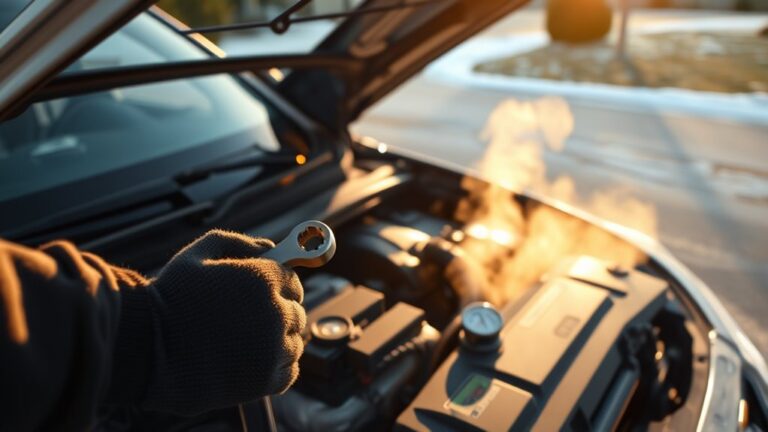
How quickly can you reset your check engine light without any special tools? Disconnecting the battery is a straightforward method. First, make sure your car is off, then use a wrench to loosen the negative battery terminal.
Leave it disconnected for about 15 minutes to clear the car’s computer memory, which resets the check engine light. Before reconnecting, it’s a good time to check your tire pressure and verify your oil change is up to date, as these maintenance tasks often trigger warning lights.
After reconnecting the battery, start your car; the light should be off. Keep in mind, this method resets all system alerts, so if the underlying issue persists, the check engine light may come back on.
Driving Cycle Reset Method
Although resetting your check engine light by disconnecting the battery is effective, you can also clear it by completing a driving cycle reset method. This method involves driving your car through specific conditions so the onboard computer can run self-tests and reset error codes.
Start by ensuring your tire maintenance is up to date. Properly inflated tires help maintain fuel efficiency and stable driving conditions. Then, drive at varying speeds, including highway speeds for about 10 minutes and city driving with stops and starts.
This process allows your vehicle’s systems to recalibrate and verify that issues are resolved. Once the cycle is complete, the check engine light should turn off on its own, saving you a trip to the mechanic and keeping your fuel efficiency optimized.
Tools Needed to Reset the Check Engine Light
To reset your check engine light, you’ll need a few essential tools. Diagnostic scanners are the most common and reliable option. But did you know there are also manual reset tools you can use?
Let’s take a closer look at what each tool offers, so you can pick the best one for your situation.
Essential Tools Overview
Before you start resetting your car’s check engine light, you’ll need a few indispensable tools to get the job done efficiently. These tools help you monitor key factors like fuel efficiency and tire pressure, which can trigger the light if they’re off. Having the right equipment saves time and guarantees accurate diagnostics.
| Tool Name | Purpose | Notes |
|---|---|---|
| OBD-II Scanner | Reads and clears codes | Essential for most resets |
| Tire Pressure Gauge | Checks tire pressure | Maintains fuel efficiency |
| Fuel Efficiency Monitor | Tracks fuel usage | Helps detect engine issues |
| Vehicle Manual | Provides reset procedures | Specific to your car model |
| Smartphone App | Connects to car’s OBD port | Convenient and user-friendly |
Each tool plays an indispensable role in resetting your check engine light effectively.
Diagnostic Scanner Options
With the right tools on hand, the next step is choosing the diagnostic scanner that fits your needs. These devices range from basic code readers to advanced scanners that provide detailed data on engine performance.
When selecting one, consider if it supports fuel efficiency monitoring. This helps you track how well your car uses fuel and can alert you to issues affecting gas mileage. Also, check if it reads codes related to emission standards compliance. This is essential for passing inspections and keeping your vehicle environmentally friendly.
Many scanners connect via Bluetooth to your phone, making it easy to view and clear codes. Investing in a reliable diagnostic scanner ensures you can reset your check engine light accurately while keeping your car running efficiently and within legal emission limits.
Manual Reset Tools
Although diagnostic scanners offer a high-tech solution, you can also reset your check engine light manually using a few simple tools. Before resetting, make sure issues like engine oil level or tire pressure are fixed to prevent the light from coming back on.
Here are the essential tools you’ll need:
- OBD-II code reader or manual reset tool
- Screwdriver or socket set for battery terminal access
- Owner’s manual for specific reset instructions
- Gloves to protect your hands
- Clean cloth to wipe battery terminals
Using these tools, you can disconnect the battery or use the reset function on the OBD-II reader to clear the code. Just remember, if the underlying problem persists, the light will return.
Safely Disconnect Your Car Battery to Reset the Light
If you want to reset your check engine light quickly, disconnecting your car battery is an effective method. First, make sure your vehicle is turned off, and locate the battery, usually under the hood. Use a wrench to loosen the negative terminal clamp; this step is essential for safety and prevents electrical shorts.
Disconnect the negative terminal and then the positive terminal. Wait about 15 to 30 minutes to allow the system to fully reset.
Keep in mind, disconnecting the battery may temporarily affect your interior comfort settings like radio presets and climate controls. After reconnecting the terminals, these systems might need resetting. However, this method can help restore maximum fuel efficiency by clearing minor glitches causing the engine light.
Once reconnected, start your car and check if the light is off. If it returns, further diagnostics may be necessary. Always handle the battery with care and avoid contact with terminals to prevent injury or damage.
Using an OBD-II Scanner to Clear Codes
Because modern vehicles come equipped with an OBD-II port, you can easily connect a scanner to retrieve and clear diagnostic trouble codes causing your check engine light. Using an OBD-II scanner is a straightforward way to not only reset the light but also understand underlying issues affecting fuel efficiency and emission standards compliance.
Modern cars feature OBD-II ports, enabling easy diagnosis and clearing of check engine codes for better performance.
Here’s how to use the scanner:
- Locate the OBD-II port, usually under the dashboard.
- Plug in the scanner and turn on your car’s ignition without starting the engine.
- Follow the scanner’s prompts to read and store trouble codes.
- Review the codes to identify problems impacting performance or emissions.
- Select the option to clear codes, which resets the check engine light.
Reset the Light by Unplugging the Fuse
When you unplug the fuse connected to your car’s engine control unit, you cut power to the system and clear stored error codes. This resets the check engine light. To do this, locate the fuse box, usually under the dashboard or hood. Find the fuse for the engine control unit using the diagram on the box cover or your owner’s manual.
Carefully remove the fuse with a fuse puller or needle-nose pliers. Wait about 10-15 minutes, then reinstall it. This interruption resets the system and erases error codes that triggered the light.
Keep in mind, unplugging the fuse resets your car’s memory, which can temporarily affect fuel efficiency as the system relearns the best settings. It also helps your vehicle comply with emission standards by clearing faults related to emissions sensors.
If the underlying issue isn’t fixed, the check engine light will come back. So, use this method as a quick reset, not a permanent fix.
Reset the Light Using a Key Cycle
Although it won’t fix the root problem, you can reset the check engine light by performing a key cycle. This method is simple and doesn’t require any tools, making it a quick way to clear the warning. Here’s how to do it:
Reset your check engine light easily with a simple key cycle—no tools needed, just a quick fix.
Insert your key into the ignition but don’t start the engine. Turn the key to the “On” position (where the dashboard lights up) and leave it there for about 10 seconds. Then, turn the key back to the “Off” position and wait 5 seconds.
Repeat this cycle 3-5 times in a row. After the last cycle, start your car normally.
This process resets the system and can help if the light came on due to minor issues like incorrect tire pressure or temporary drops in fuel efficiency. Keep an eye on the light afterward. If it returns, it’s best to get a proper diagnosis to avoid bigger problems.
How Long It Takes for the Check Engine Light to Reset Automatically
You might be wondering how long it takes for the check engine light to turn off by itself. Usually, it resets after a few drive cycles once the problem is fixed. But keep in mind, things like the type of issue and how you drive can change that timing a bit.
Typical Reset Time
Since the check engine light signals your car’s computer about detected issues, it doesn’t reset instantly after the problem is fixed. Typically, it takes some driving for the system to confirm that engine performance and fuel efficiency have returned to normal.
Here’s what you can expect for the typical reset time:
- Around 20 to 40 driving cycles
- Each cycle includes a cold start and normal driving
- Roughly a few days of regular use
- Varies from 50 to 100 miles driven
- Light turns off once the system detects no ongoing faults
Be patient; the light stays on until your car’s computer verifies the issue is resolved to maintain ideal engine performance and fuel efficiency.
Factors Affecting Reset
When your check engine light stays on longer than expected, various factors can influence how quickly it resets on its own. One key factor is engine performance. If your engine runs smoothly without misfires or issues, the system may clear the light faster. On the other hand, persistent problems slow down the reset process.
Fuel efficiency also plays a role. Poor fuel combustion or leaks can trigger the light and prolong its activation.
Furthermore, driving habits affect the reset time. Steady driving allows the onboard diagnostics to complete cycles needed for the light to turn off.
Environmental conditions, such as temperature and altitude, may also impact sensor readings and delay the reset. Understanding these factors helps you manage expectations about how long the check engine light takes to reset automatically.
What to Do If the Check Engine Light Stays On After Reset
If the check engine light stays on after you’ve reset it, it signals that the underlying issue hasn’t been resolved. Ignoring it can hurt your car’s fuel efficiency and emissions compliance. This could lead to costly repairs or failed inspections. Here’s what you should do next:
Double-check for loose gas caps, which often trigger the light. Use an OBD-II scanner to retrieve error codes for clearer diagnostics.
Monitor your vehicle’s performance for symptoms like rough idling or decreased power. Clear the codes again after any fixes, then drive to see if the light returns.
Keep a close eye on fuel efficiency and emissions-related behaviors as they reflect your car’s health.
When You Should See a Mechanic Instead of Resetting the Light Yourself
Although resetting the check engine light can sometimes solve minor issues, you should see a mechanic if the light returns quickly or flashes. A flashing check engine light often signals a serious problem, like engine misfires, which can harm your car and compromise road safety. Ignoring these warnings or repeatedly resetting the light without proper diagnosis can lead to costly repairs or even accidents.
Regular car maintenance helps prevent issues that trigger the check engine light, but when it does come on persistently, professional inspection is vital. Mechanics have the tools to accurately diagnose problems beyond what you can reset at home. Prioritizing road safety means addressing potential hazards promptly rather than masking the symptoms.
If your check engine light flickers or stays on despite resets, don’t take risks. Schedule a mechanic visit to ensure your vehicle runs safely and efficiently, protecting both you and others on the road.
Frequently Asked Questions
Can Resetting the Check Engine Light Affect My Car’s Warranty?
Resetting the check engine light can have warranty implications depending on your manufacturer policies. If you reset the light without addressing the underlying issue, your warranty might not cover related repairs later.
Manufacturers often require that diagnosed problems be fixed properly to maintain warranty protection. So, you should check your warranty terms and follow recommended procedures to avoid voiding coverage.
Ignoring the root cause could lead to denied claims.
Will Resetting the Light Erase My Car’s Maintenance History?
Resetting the check engine light won’t erase your car’s maintenance history because that info is stored separately in your vehicle’s computer system or service records. When you use diagnostic tools or follow reset procedures, you’re just clearing the error codes, not the maintenance logs.
Is It Safe to Drive With the Check Engine Light on Before Resetting?
It’s not always safe to drive with the check engine light on. Dashboard indicators like this warning light signal something needs attention. Sometimes, it’s minor, but other times, it could lead to serious engine damage or safety issues.
You should never ignore warning lights; instead, get your car checked promptly. By doing this, you avoid risking costly repairs or breakdowns, keeping your drive safe and smooth.
How Often Can I Reset the Check Engine Light Without Repairs?
You shouldn’t reset the check engine light repeatedly without fixing the issue. Using diagnostic tools helps identify the real problem before you run reset procedures.
If you keep resetting without repairs, you risk missing serious issues that could worsen. It’s best to use diagnostic tools first, fix the root cause, then reset the light.
That way, you keep your car safe and avoid unnecessary stress.
Does Resetting the Check Engine Light Improve Fuel Efficiency?
Resetting the check engine light doesn’t directly improve your fuel economy. It simply clears the warning. But if the underlying issue isn’t fixed, your car may still run inefficiently.
To truly boost fuel economy and reduce emissions, you need to address the root problem causing the light. Ignoring repairs might mask issues, but it won’t optimize your engine’s performance or save you gas in the long run.
Conclusion
Remember, “an ounce of prevention is worth a pound of cure.” While resetting your check engine light can be quick and easy, don’t ignore the underlying issue causing it.
Use the right tools and follow safety steps. If the light stays on or returns quickly, see a mechanic.
Taking care of your car now saves you from bigger headaches later, ensuring your ride stays safe and reliable on the road. Resetting a car check engine light is helpful, but addressing the root problem is what truly keeps your vehicle running smoothly.