How to Reset Car Engine Light in 3 Simple Steps
If you’ve ever seen that pesky car engine light pop up on your dashboard, you’re not alone. Many people struggle with what it means and how to get it to turn off without costly trips to the mechanic. The good news is, resetting your car engine light can be simpler than you think—and we’re here to guide you through it.
To reset your car engine light, first identify the cause by checking for obvious issues or using an OBD-II scanner to read diagnostic codes.
Next, turn off your vehicle, locate the OBD-II port, and connect the scanner to clear the codes.
If the light stays on, fix underlying problems like faulty sensors before resetting again.
Taking these steps helps guarantee your engine light won’t keep coming back.
Keep going to find tips for handling persistent warnings.
Key Takeaways
- Turn off the vehicle and locate the OBD-II port under the dashboard.
- Plug in an OBD-II scanner and follow its instructions to read and clear trouble codes.
- Alternatively, disconnect the car battery for about 15 minutes to reset the engine light.
- Make sure all underlying issues are fixed before resetting to prevent the light from coming back.
- After resetting, check tire pressure and fuel efficiency to confirm proper vehicle operation.
Diagnose Why Your Engine Light Is On
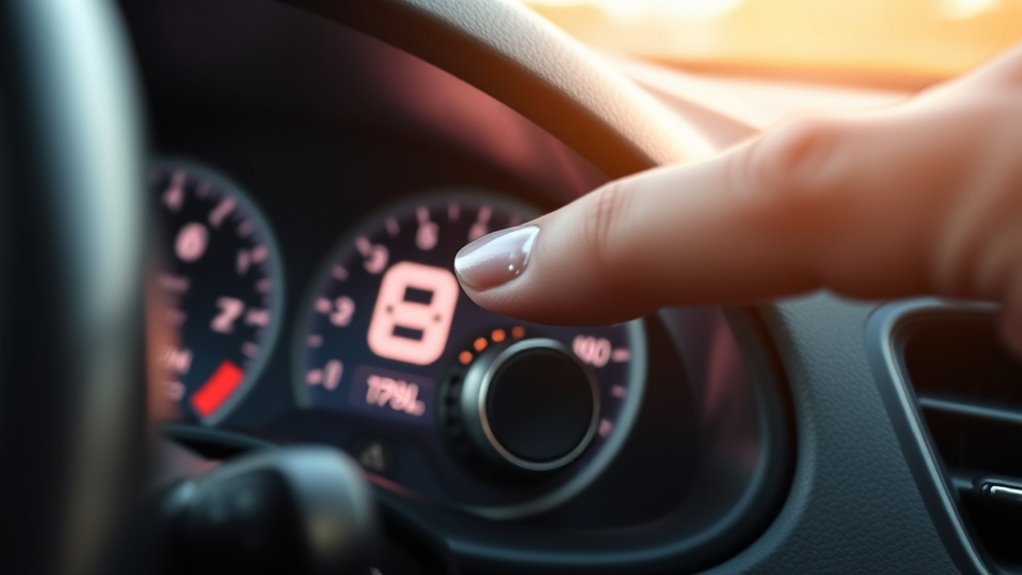
Before you can reset your car’s engine light, you need to diagnose why it’s on. That light usually signals an issue affecting your vehicle’s fuel efficiency or emission controls. Ignoring it can lead to costly repairs or increased pollution.
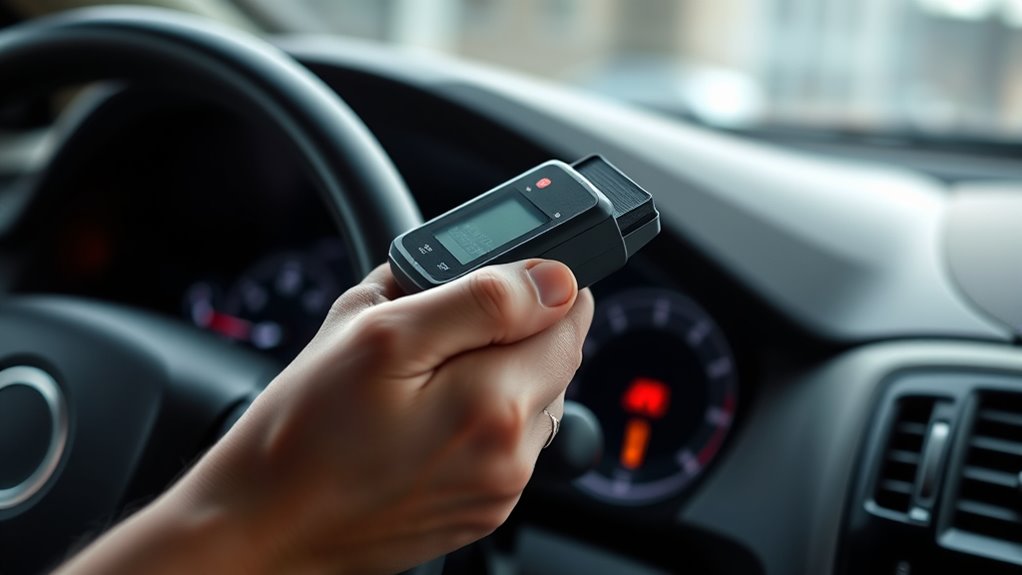
Start by checking for obvious problems like a loose gas cap, which can trigger the light and hurt your fuel efficiency. If the cap is secure, use an OBD-II scanner to read the diagnostic trouble codes stored in your car’s computer.
These codes pinpoint malfunctions related to emission controls, sensors, or engine components. You can find OBD-II scanners online or at auto parts stores, and many repair shops offer free code reading.
Reset Your Car Engine Light at Home
Once you’ve identified and fixed the problem causing your engine light, you can reset it yourself without visiting a mechanic. Start by turning your car off and locating the OBD-II port, usually under the dashboard. Plug in an OBD-II scanner, which you can buy or borrow, and follow the device’s instructions to clear the error codes. This will turn off the engine light.
If you don’t have a scanner, you can try disconnecting the car battery for about 15 minutes. This may reset the system, but be aware it can also clear radio presets and other settings.
After resetting, check your tire pressure to ensure it’s optimal, as low tire pressure can affect fuel efficiency and trigger warning lights. Keep an eye on your fuel efficiency; if the light returns, it could signal an unresolved issue. Resetting the engine light at home saves time and gets you back on the road quickly.
Fix It When Your Engine Light Won’t Reset
If your engine light won’t reset after trying to clear the codes or disconnecting the battery, it usually means there’s a persistent issue that needs further attention. When dashboard indicators and warning lights stay on, it signals that your vehicle’s system still detects a problem.
You’ll want to connect an OBD-II scanner to your car to read the specific trouble codes. This will help you identify the exact cause behind the stubborn light. Fixing the underlying issue, whether it’s a faulty sensor, loose gas cap, or emissions problem, is essential before the light resets.
Simply clearing the codes won’t work if the problem persists. After repairs, you can clear the codes again, and the warning lights should turn off. If the engine light still stays on, consult a professional mechanic who can perform a deeper diagnostic to resolve complex issues.
Ignoring persistent dashboard indicators can lead to costly damage.
Frequently Asked Questions
Can a Low Battery Cause the Engine Light to Turn On?
Yes, a low battery can cause your engine light to turn on. When your battery health declines, it affects the electrical system, leading to voltage drops or inconsistent power supply. This can trigger sensors and cause the engine light to illuminate.
How Often Should I Check My Engine Light?
You should check your engine light regularly, especially if you live in a cold climate where battery performance can drop. Battery maintenance is essential because a weak battery can trigger the light unexpectedly.
Make it a habit to glance at the engine light every time you start your car and address any warning immediately. This way, you’ll catch problems early and avoid costly repairs down the road. Don’t ignore it!
Does Cold Weather Affect the Engine Light?
Yes, cold weather can affect your engine light. When temperatures drop, engine diagnostics might detect issues like thicker oil or slower fuel vaporization, which can trigger the light.
Your car’s system is sensitive to changes, so cold weather can cause temporary alerts. However, if the light stays on, you should run a full engine diagnostics check to identify any real problems before they worsen.
Don’t ignore the warning just because it’s cold outside.
Can Engine Light Issues Impact Fuel Efficiency?
Imagine your car’s engine light as a red flag waving. Yes, it can impact your fuel consumption. When this light signals an issue, your emission control system might not work properly, causing your engine to burn more fuel than usual.
This inefficiency not only drains your wallet but also harms the environment. So, don’t ignore that warning. Addressing engine light problems helps maintain better fuel efficiency and keeps emissions in check.
Is It Safe to Drive With the Engine Light On?
It’s not always safe to drive with the engine light on. Your dashboard warning signals that the engine diagnostics detected a problem.
Sometimes, it’s a minor issue, but other times it could lead to serious damage or safety risks. You should check the diagnostics promptly to understand the severity.
If the light flashes or stays on steadily, it’s best to stop driving and get your car inspected to avoid costly repairs or breakdowns.
Conclusion
Resetting your car engine light is easier than you might think. Even if you’re worried about messing something up, following these three simple steps lets you take control without a mechanic.
Just diagnose the issue, reset the light at home, and if it won’t reset, troubleshoot the problem further. Imagine turning that warning off yourself—it’s like flipping a switch and getting peace of mind in minutes.
You’ve got this! Resetting your car engine light can be quick and empowering when you know how.