How to Recharge Your Car Air Conditioning in 7 Easy Steps
How to Recharge Your Car Air Conditioning: Dealing with a car air conditioner that just won’t blow cold air can be super frustrating, especially on those sweltering days. You’re not alone—many people struggle with weak or warm airflow from their vehicle’s A/C.
Luckily, recharging your car air conditioning is something you can handle yourself, saving time and money while staying cool on the road.
If your car’s A/C blows warm air or shows weak airflow, it’s time to recharge it. First, gather a recharge kit and confirm the correct refrigerant type. Locate the low-pressure port, wear safety gear, and securely attach the hose.
Slowly add refrigerant while monitoring pressure. Run the A/C to check if the airflow cools off properly.
If problems persist, troubleshooting helps. Keep going to uncover all the details for a perfectly chilled ride.
How to Recharge Your Car Air Conditioning Key Takeaways
- Identify low refrigerant signs like warm air or weak airflow before starting the recharge process.
- Locate and securely connect the recharge kit to the low-pressure port, wearing safety gear.
- Slowly add refrigerant while monitoring pressure with the gauge to avoid overcharging.
- Test the A/C by setting it to the coldest setting and confirm improved airflow temperature.
- Troubleshoot leaks or compressor issues if cooling remains ineffective and seek professional help if needed.
Identify Signs Your Car Air Conditioning Needs Recharging

Although your car’s air conditioning might seem fine, you’ll notice it needs recharging when it no longer cools the cabin effectively. One common sign is warm air blowing from the vents even at the highest A/C setting.
You might also detect unusual noises or a weak airflow, indicating low refrigerant levels. To confirm, performing A/C system diagnostics is essential. These diagnostics check pressure levels and help identify leaks or other issues.
Keep in mind that different refrigerant types, like R-134a or the newer R-1234yf, require specific handling and recharging procedures. If you spot frost on the compressor or notice the A/C cycles on and off frequently, these are additional indicators that your system needs attention.
Acting early prevents damage and keeps your car comfortable. By recognizing these signs and understanding your vehicle’s refrigerant type, you can decide when it’s time for a recharge or professional inspection.
Gather Tools and Refrigerant for Your Car Air Conditioning
Before you start recharging your car’s air conditioning, make sure you have the right tools and refrigerant on hand. You’ll typically need a recharge kit, which includes a pressure gauge and hose.
Knowing the refrigerant types compatible with your car is vital. Most vehicles use R-134a or the newer R-1234yf. Check your owner’s manual or the label under the hood to confirm the correct type. Using the wrong refrigerant can damage your system.
Identify your car’s refrigerant type—R-134a or R-1234yf—to avoid damaging your air conditioning system.
Proper tool maintenance is essential for accurate readings and safe operation. Inspect your gauges and hoses for any cracks or leaks before use. Clean the connectors to guarantee a tight seal during recharging.
Also, store your refrigerant canisters upright in a cool place to maintain their effectiveness. Having well-maintained tools and the correct refrigerant ready will make the recharging process smoother and more efficient.
Locate the Low-Pressure Port on Your Car’s A/C System
Before you recharge your A/C, you need to find the low-pressure port. This is where you’ll connect the refrigerant hose. It helps to grab a flashlight and your car manual to spot this port—it’s usually marked with an “L” or has a larger diameter than the high-pressure port. Knowing exactly where it is means you won’t make a costly mistake during the recharge.
Identifying Low-Pressure Port
When you’re ready to recharge your car’s A/C, the first step is to find the low-pressure port. This port is usually located on the larger diameter aluminum tubing between the compressor and the evaporator.
It often has a plastic cap labeled with an “L” or the words “Low.” Different refrigerant types, like R-134a or R-1234yf, require you to use the correct port, so double-check your vehicle’s specifications.
The low-pressure port is where you’ll connect your gauge for pressure measurement, which helps guarantee the system is recharged safely and effectively. Avoid confusing it with the high-pressure port, which is smaller and can be dangerous if handled incorrectly. Identifying the right port is essential for a successful recharge.
Tools Needed for Location
Although finding the low-pressure port may seem straightforward, having the right tools makes the task much easier and safer. You’ll need a flashlight to clearly see under the hood and a pair of gloves to protect your hands from any refrigerant exposure.
A set of A/C gauges designed for your specific refrigerant types ensures accurate pressure readings and avoids cross-contamination. Keep your tools clean and well-maintained to prevent damage and ensure reliable performance.
Having a small mirror can help you spot the port in tight spaces. Remember, the low-pressure port usually has a larger diameter and a cap labeled with an “L” or blue color.
Using the proper tools and maintaining them properly helps you locate the port efficiently and securely before recharging your car’s A/C system.
How to Safely Hook Up Your Recharge Kit
Since handling refrigerant requires care, you’ll want to connect your recharge kit properly to avoid leaks or injury. Begin by wearing safety goggles and gloves as essential safety precautions. Locate the low-pressure service port on your car’s A/C system. It’s usually labeled and smaller than the high-pressure port.
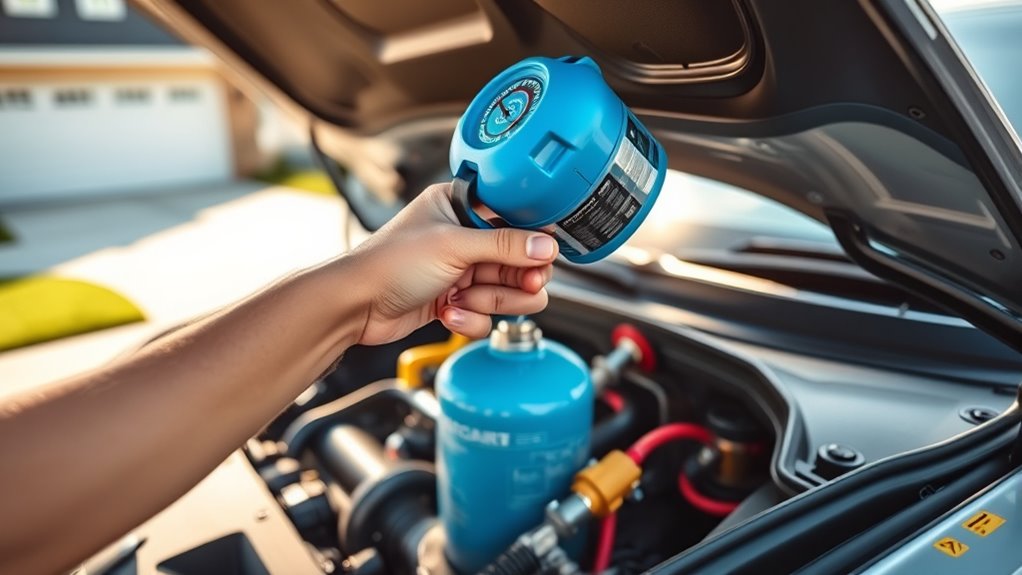
Attach the recharge kit’s hose securely to this port, making sure the connection is tight to prevent refrigerant from escaping. Never connect to the high-pressure port, as it can cause injury or damage. Before attaching, check that the kit’s valve is closed to avoid accidental release.
If you find any refrigerant leakage, stop immediately and address the issue. Remember, refrigerant disposal must follow local regulations; never vent it into the atmosphere. After hooking up, keep the can upright to ensure proper flow. Taking these steps guarantees your safety and protects the environment during the recharge process.
Add Refrigerant While Monitoring Pressure Levels
You’ll want to keep a close eye on the pressure gauge as you add refrigerant to make sure it stays within the recommended range. Also, make certain you’re using the correct type of refrigerant for your car so you don’t cause any damage.
Add the refrigerant slowly, too, to prevent overcharging and to ensure the system works properly. Taking it step by step really helps keep everything running smoothly.
Checking Pressure Gauge
Before adding refrigerant, you need to connect the pressure gauge to your car’s air conditioning system to monitor the levels accurately. Proper pressure testing guarantees you don’t overfill or underfill the system, which can cause damage or poor cooling.
Start by checking the gauge calibration to confirm accurate readings. Once connected, monitor the low and high-pressure sides while adding refrigerant slowly.
Keep these tips in mind:
- Ensure the gauge is compatible with your car model.
- Attach hoses securely to avoid leaks.
- Read pressure levels at engine idle with A/C on.
- Compare readings to manufacturer’s specifications.
- Stop adding refrigerant when pressure reaches recommended levels.
Accurate pressure gauge monitoring helps maintain system efficiency and prevents costly repairs.
Selecting Correct Refrigerant
How do you know which refrigerant suits your car’s air conditioning system? First, check your owner’s manual or the label under the hood for the recommended refrigerant type. Cars commonly use R-134a or the newer R-1234yf, each with different chemical properties and environmental impact.
Older refrigerants like R-12 are phased out due to their ozone-depleting effects. Choosing the correct refrigerant is vital to avoid damaging your AC system and to comply with environmental regulations.
While adding refrigerant, keep an eye on the pressure levels through your gauge to make certain you don’t overfill or underfill the system. Proper monitoring helps maintain performance and prevents leaks or excessive strain.
Always use a refrigerant compatible with your vehicle to protect both your car and the environment.
Adding Refrigerant Slowly
When adding refrigerant, take your time and monitor the pressure levels closely to avoid overfilling or underfilling the system. Different refrigerant types require specific handling, so verify you’re using the right one for your vehicle. Follow safety precautions strictly to protect yourself and your car’s components.
Connect the recharge hose securely to prevent leaks. Add refrigerant in short bursts, checking pressure after each. Use the gauge to confirm pressure stays within manufacturer’s recommended range.
Avoid breathing in refrigerant vapors and wear gloves to protect your skin. Stop adding refrigerant once the ideal pressure is reached to maintain system efficiency.
Slow, careful addition keeps your AC running smoothly and prevents costly damage.
Run Your A/C and Check for Cooler Airflow
Once you’ve recharged your car’s air conditioning system, turn on the A/C and set it to the coldest setting to check if the airflow feels noticeably cooler. Pay close attention to the vents; the air should be considerably colder than before.
This step is essential for airflow optimization, ensuring that the refrigerant circulates properly and cools the cabin effectively. If the airflow isn’t as cold as expected, the system may need more refrigerant or another inspection.
Keep the fan speed at a medium or high setting to maximize airflow and improve cabin comfort. Also, make sure the recirculation mode is on to better cool the inside air rather than pulling in warm outside air.
Troubleshoot Common A/C Issues After Recharging
Even if you’ve recharged your car’s A/C, you might still face some common issues that affect cooling performance. It’s important to troubleshoot these problems to guarantee your system works efficiently. Start by checking for refrigerant leaks, as low refrigerant levels are a frequent cause of poor cooling.
The A/C compressor could also be failing or not engaging properly, which stops the system from circulating refrigerant effectively.
Here are some key issues to watch for:
- Refrigerant leaks around hoses, connections, or the compressor
- A/C compressor clutch not engaging or making unusual noises
- Blocked or dirty condenser restricting airflow
- Faulty pressure switches causing system shutdowns
- Electrical issues like blown fuses or bad relays
Addressing these areas will help you pinpoint why your A/C isn’t cooling well even after a recharge. If you’re unsure, it’s best to consult a professional mechanic.
Frequently Asked Questions
Can I Recharge My Car A/C Myself Without Professional Help?
Yes, you can recharge your car A/C yourself with a DIY repair kit, but you need to be cautious. These kits are affordable and straightforward, but they require some basic knowledge and the right tools.
If you’re unsure about handling refrigerants or diagnosing leaks, it’s best to seek professional service. A pro will guarantee the system is properly checked, recharged, and safe, avoiding potential damage or health risks.
How Often Should I Recharge My Car Air Conditioning System?
You should recharge your A/C system only when it’s necessary, usually every 1-2 years. However, don’t guess. Run A/C system diagnostics to check refrigerant levels first.
If you notice weak cooling, have a refrigerant leak detection done to verify there’s no leak causing the problem. Recharging without fixing leaks won’t help much.
What Type of Refrigerant Is Compatible With My Car Model?
Think of your car’s AC system as a delicate recipe. Using the wrong ingredient can spoil the dish. To pick the right refrigerant type, follow your vehicle’s compatibility guidelines found in the owner’s manual or under the hood label.
Most modern cars use R-134a or R-1234yf refrigerants. Using the correct refrigerant type guarantees your AC runs efficiently and avoids damage. Always double-check before recharging to keep your system cool and healthy.
Is It Safe to Use Generic Refrigerants Instead of Brand-Specific Ones?
You shouldn’t use generic refrigerants without checking first, as refrigerant safety varies between types. Generic vs branded options might seem similar, but branded refrigerants often meet specific standards for your vehicle, ensuring peak performance and preventing damage.
Using the wrong type could harm your AC system or reduce efficiency. Always prioritize refrigerant safety by following your car manufacturer’s recommendations to avoid costly repairs and keep your AC running smoothly.
Can Recharging My A/C Improve Fuel Efficiency?
Think of your car’s cooling system like a vintage steam engine: when it’s well-maintained, it runs smoothly and efficiently. Recharging your A/C can help optimize the cooling system’s performance, reducing energy consumption.
When the refrigerant is low, your compressor works harder, wasting fuel. By keeping it charged, you reduce strain and improve fuel efficiency. So, yes, recharging your A/C can save gas and keep your ride cooler at the same time.
Conclusion
Now that you’ve recharged your car’s A/C, you can enjoy cool breezes like it’s a summer day in the Roaring Twenties. Remember to keep an eye on your system’s pressure and airflow to guarantee it’s running smoothly.
If you hit any snags, don’t hesitate to troubleshoot. With these simple steps, you’re all set to beat the heat and keep your ride comfortable because nobody wants to sweat it out behind the wheel!
Recharging your car air conditioning is the key to staying cool and comfortable during those hot drives.