7 Tips to Avoid Rats in Your Car Engine
Dealing with rats nesting in your car engine is frustrating and can lead to expensive repairs. If you’ve ever found chewed wires or droppings under your hood, you’re not alone—many people struggle with this pesky problem.
Luckily, there are effective ways to keep these rodents at bay and protect your vehicle.
To keep rats out of your car engine, seal all gaps near wiring, hoses, and vents using steel wool or silicone caulk. Keep the area clean by removing trash, leaves, and clutter that attract rodents.
Park in well-lit, open spaces to discourage nesting.
Use natural repellents like peppermint oil near entry points. Protect your wiring with rodent-resistant covers and inspect your engine regularly for signs of damage.
Following these tips can help you prevent costly repairs and maintain a rodent-free vehicle.
Key Takeaways
- Seal gaps around wires, hoses, and vents with steel wool, wire mesh, or silicone caulk to block rat entry points.
- Park in well-lit, open areas away from trash, debris, and clutter. This helps reduce rat attraction and nesting opportunities.
- Use rodent-resistant wiring covers and sleeves to protect cables from chewing damage inside the engine bay.
- Apply natural repellents like peppermint or eucalyptus oil-soaked cotton balls near entry points. The strong scents help deter rats.
- Regularly inspect the engine compartment for chew marks, droppings, and nests to catch and address rat activity early.
How Rats Get Into Your Car Engine

Though it might surprise you, rats often crawl into your car engine seeking warmth, shelter, and food. They’re drawn to the cozy spaces your engine bay provides, especially during colder months.
Once inside, they can cause serious trouble by chewing on wires and hoses. This might lead to engine overheating or damage to your fuel system. Rats easily squeeze through small openings, like gaps in the wheel wells or under your hood, making it easy for them to settle in unnoticed.
Rats chew wires and hoses, risking engine overheating and fuel system damage by sneaking through tiny gaps unnoticed.
If you park near trash or food sources, you’re basically inviting them closer. The more time they spend inside your engine compartment, the higher the risk of mechanical issues.
You might not realize it, but these critters can disrupt your car’s performance by damaging key components. Being aware of how rats get in helps you take early steps to protect your vehicle before costly repairs become necessary.
Seal Gaps and Openings Around Your Engine to Block Rats
You’ll want to keep an eye out for common entry points like gaps around wiring, vents, and hoses. Using effective sealing materials—things like steel wool, wire mesh, or silicone caulk—can really help block these openings. Taking this step makes it a lot harder for rats to sneak into your engine.
Common Entry Points
Where do rats typically enter your car engine? They often squeeze through gaps around engine coolant lines, radiator hoses, and wiring harnesses. These small openings provide easy access to cozy spots inside your engine bay. To protect your car, focus on sealing these common entry points.
| Entry Point | Description | Why It’s Vulnerable |
|---|---|---|
| Engine Coolant Lines | Gaps around hoses | Flexible, easy to chew |
| Radiator Hoses | Openings at hose connections | Warm, near fluids |
| Wiring Harness | Loose cable bundles | Hidden, less disturbed |
Blocking these areas helps prevent rats from nesting and causing damage. Regularly check and seal any loose spots around these parts to keep your engine rat-free.
Effective Sealing Materials
Because rats can squeeze through surprisingly small gaps, choosing the right sealing materials is crucial to keep them out of your engine bay. You should use high-quality sealants and soundproof barriers designed to block even the tiniest openings. These materials not only prevent rodent entry but also help reduce engine noise.
Applying advanced insulation techniques, like weather stripping and foam tapes, creates a tight barrier around wires, pipes, and vents where rats often enter. Avoid using materials that degrade quickly or attract rodents, such as fabric or untreated foam.
Instead, opt for durable, rat-resistant options to guarantee long-lasting protection. By effectively sealing gaps and openings with these materials, you’ll considerably reduce the chance of rats nesting in your engine compartment, protecting both your vehicle and peace of mind.
Keep the Area Around Your Car Engine Clean and Clutter-Free
Although it might seem minor, keeping the area around your car engine clean and clutter-free plays a big role in deterring rats. Rodents are attracted to places that offer easy access to food, shelter, and hiding spots. By practicing regular car cleaning and clutter removal, you remove those inviting conditions.
Keeping your car engine area clean and clutter-free is key to deterring rats and avoiding infestations.
Avoid leaving trash, food wrappers, or piles of leaves near your vehicle. They can attract rats looking for a cozy spot.
Make it a habit to sweep or hose down the ground where you park and clear away any debris or stored items close to your car. Clutter provides rats with hiding places and nesting materials, so keeping this area tidy limits their chances of settling in.
A clean, clutter-free space around your car engine not only helps prevent rats but also makes it easier to spot any early signs of rodent activity. This way, you can act quickly before problems escalate.
Park in Well-Lit, Open Spaces to Discourage Rodents
Choosing a well-lit, open space to park your car can considerably reduce the chances of rodents making their way into your engine. Rats prefer dark, hidden spots where they feel safe, so parking in brightly lit, open areas removes their cover and discourages them from nesting near your vehicle.
When you prioritize this parking strategy, you’re actively supporting good car maintenance by minimizing the risk of rodent damage.
Rodents chewing wires or nesting in your engine can lead to costly engine troubleshooting and repairs. By parking in spaces with plenty of light and visibility, you make your car less attractive to these pests.
This simple habit complements other preventative measures and helps you maintain your vehicle’s reliability. So, always look for open, well-lit spots, especially overnight, to protect your engine from unwanted rodent visitors. It’s a straightforward step that can save you time, money, and frustration in the long run.
Use Natural Repellents That Effectively Deter Rats
You can keep rats away by using natural repellents like essential oils—rats really hate the smell. For example, try making your own repellent with simple ingredients like peppermint oil and water. Then, just place it strategically around your engine. This way, you create an environment that rats want to avoid, all without relying on harsh chemicals.
Essential Oils That Repel
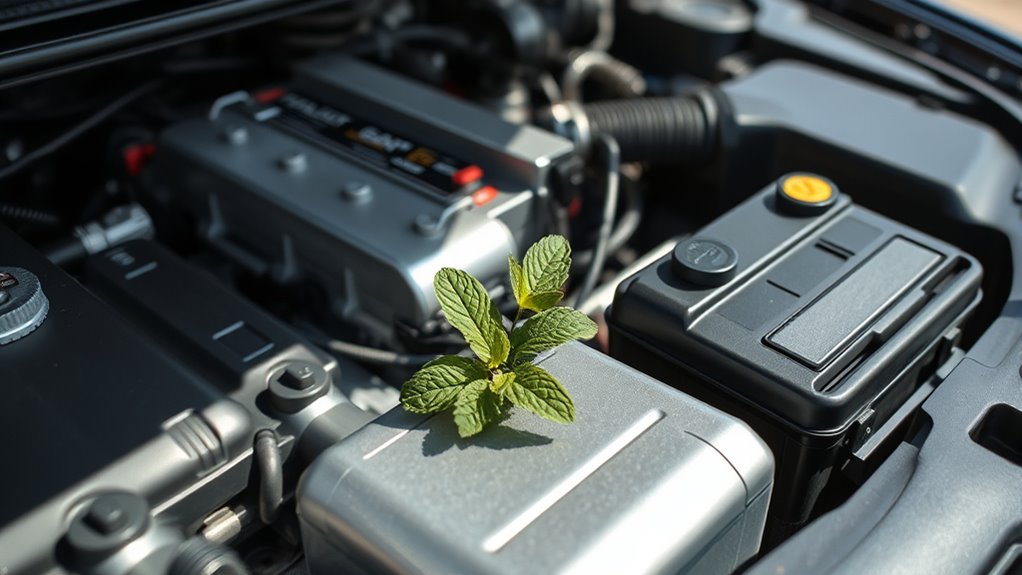
Since rats dislike strong scents, using essential oils can be a natural and effective way to keep them away from your car engine. Essential oils like peppermint, eucalyptus, and citronella are known to disrupt rodent behavior because their strong smells irritate rats’ sensitive noses.
You can apply a few drops of these oils on cotton balls and place them strategically around your engine bay or near entry points. This method won’t harm the rats but will encourage them to avoid your vehicle altogether.
Keep in mind that essential oils evaporate quickly, so you’ll need to reapply them regularly to maintain their effectiveness. Using essential oils taps into natural rodent aversion without resorting to harmful chemicals, making it a safe option for both you and the environment.
Homemade Repellent Recipes
Three simple homemade repellent recipes can help keep rats away from your car engine using natural ingredients you likely have at home. These DIY sprays and herbal repellents are easy to make and effective in deterring unwanted rodents.
- Mix water, peppermint oil, and a few drops of dish soap for a strong DIY spray that repels rats.
- Combine crushed garlic and water to create a pungent herbal repellent spray.
- Blend vinegar with water and spray around the engine bay to discourage rats’ presence.
- Infuse dried chili flakes in water overnight, then strain and spray the liquid as a spicy DIY repellent.
Using these natural recipes avoids harsh chemicals and keeps your car rat-free safely and affordably.
Placement Tips For Effectiveness
Although natural repellents work well, their placement is key to keeping rats away from your car engine. You’ll want to position them near common entry points like the wheel wells, under the hood, and around the engine bay. This guarantees the scent spreads effectively, discouraging rodents from nesting.
During engine maintenance, avoid disturbing repellent spots too often. Consistent scent presence is essential. Also, consider your parking strategies. Parking in open, well-lit areas reduces rat activity.
If you park in garages or near vegetation, reinforce repellents around those spots. Using a combination of natural repellents placed strategically helps create a barrier that rats won’t cross. This approach, combined with regular engine maintenance, keeps your car rodent-free without harsh chemicals.
Check Your Car Regularly for Signs of Rat Damage
When you check your car regularly, you can catch signs of rat damage early before they cause costly repairs. Understanding rodent behavior helps you spot potential issues during your car maintenance routine. Rats often chew on wires and make nests in warm, hidden spots under the hood.
Regular car checks help detect rat damage early, preventing costly repairs by spotting signs under the hood.
Here are four key signs to look for:
1. Chewed wires or cables
Look for frayed or stripped wiring, which can disrupt your car’s electrical system.
2. Nests or droppings
Check for shredded material or droppings near the engine compartment.
3. Unusual odors
A musty, ammonia-like smell may indicate rodent presence.
4. Gnaw marks on insulation or hoses
Inspect rubber hoses and insulation for bite marks.
Protect Your Wiring With Rodent-Resistant Covers
Spotting signs of rat damage early helps you understand where your car is vulnerable. One of the most common targets for rodents is your car’s wiring, which can cause costly repairs. To prevent this, invest in rodent-proof wiring covers.
These protective sleeves are designed to withstand chewing and block access to your wires, ensuring your engine insulation and electrical systems stay intact. When you install rodent-resistant covers, you add a durable barrier that considerably reduces the chance of rats nesting or gnawing on crucial cables.
Make sure to cover all exposed wiring and any areas where insulation might be compromised. Consistently check these covers for wear and replace them if needed.
Frequently Asked Questions
What Types of Rats Are Most Likely to Infest Car Engines?
The types of rats most likely to infest your car engine are Norway rats and roof rats. Understanding rodent behavior helps you realize they seek warmth and shelter in tight spaces like engines.
If you notice infestation signs such as gnaw marks, droppings, or nesting materials, it’s a clue they’re nearby. You’ll want to act quickly to prevent damage and keep your car safe from these persistent rodents.
Can Rats Cause Damage to Other Parts of My Vehicle?
Yes, rats can be sneaky saboteurs in your vehicle. They often gnaw on electrical wiring, which can cause shorts or even fires, turning your car into a ticking time bomb.
They might also chew into the fuel system, risking leaks that are both dangerous and costly. Think of them as tiny vandals leaving a trail of destruction. Catching them early saves you from expensive repairs and keeps your ride safe.
Are There Specific Car Models More Prone to Rat Infestations?
Yes, certain car models show higher car model susceptibility to rat infestations due to their engine design risks. If your vehicle has an engine bay with lots of tight spaces or exposed wiring, it becomes more attractive to rats seeking shelter and nesting spots.
Models with poor sealing or accessible gaps increase these risks. Knowing your car’s design helps you take targeted steps to protect it from unwanted critters.
How Long Can Rats Survive Inside a Car Engine Compartment?
Rats can survive inside a car engine compartment for several days to weeks, depending on food availability and shelter. Since rats’ dietary habits include nibbling on wires and stored debris, they might stay longer if your car offers food crumbs or nesting materials.
To keep them out, use infestation prevention methods like sealing gaps, removing food sources, and parking in well-lit areas. Staying proactive helps you avoid costly damage and frustrating repairs.
What Should I Do if I Find a Rat Nest in My Car?
If you find a rat nest in your car, remove it carefully using gloves and dispose of it properly. Then, clean the area thoroughly to eliminate scent trails.
Use effective repellents like peppermint oil or commercial rodent sprays to discourage return visits. Finally, implement rodent proofing methods such as sealing entry points and parking in well-lit areas.
Regularly inspect your engine compartment to keep rats away and protect your vehicle.
Conclusion
By taking these steps, you can keep rats from turning your car engine into their next playground. Think of your car like a fortress. Seal every gap, keep it clean, and park smart to keep unwanted guests out.
Regularly checking for signs of damage and using natural repellents will make your vehicle less inviting. Protecting your wiring with rodent-resistant covers is the final shield.
With a little effort, you’ll keep your car running smoothly and rat-free. Following these tips to avoid rats in your car engine is the key to protecting your vehicle.