10 Steps to Find My Car Engine Size
If you’ve ever tried to figure out your car’s engine size, you know it can be confusing and frustrating. You’re not alone—many people struggle with locating accurate engine information without the right tools or knowledge. Whether you’re buying parts, planning upgrades, or just curious, knowing your engine size is essential.
To find your car’s engine size, start by checking the owner’s manual and vehicle registration for engine details. Look for the VIN plate on the driver’s door frame and use online VIN decoders to get exact specs.
Inspect under-hood stickers and the engine block for stamped info. Visit the manufacturer’s website or ask a mechanic for confirmation. You can also join online forums for tips.
Follow these steps, and you’ll soon understand everything you need to know about your engine.
Key Takeaways
- Check your owner’s manual or vehicle documents for engine size details like capacity and oil type.
- Locate the VIN plate on the driver’s door frame and use online VIN decoders to find engine specifications.
- Inspect under-hood and emissions stickers for engine displacement and horsepower information.
- Look for stamped numbers or casting codes on the engine block indicating engine size.
- Consult a mechanic or dealership for professional verification and detailed engine information.
Check Your Vehicle’s Owner Manual for Engine Size

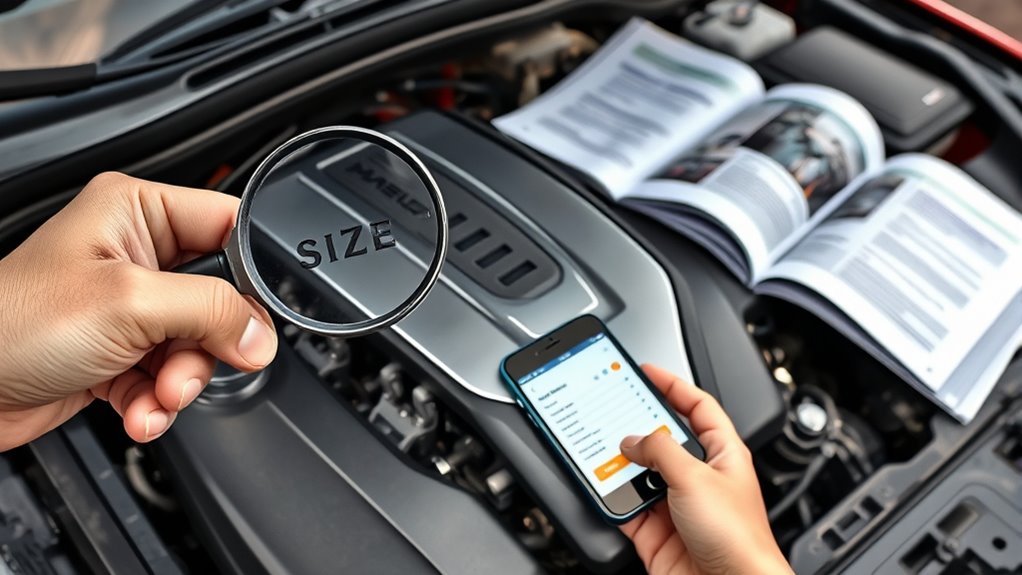
Although you might not have thought about it before, your vehicle’s owner manual is one of the easiest places to find your car’s engine size. When you open the manual, look for the specifications section. It usually lists engine details alongside other essential info like recommended engine oil type and tire pressure.
This section helps you understand what capacity engine your car has, whether it’s a 2.0L, 3.5L, or something else. Checking here saves you time and guarantees you get accurate data straight from the manufacturer.
You might also find additional tips on maintaining your engine, such as the best oil viscosity and how often to check tire pressure for peak performance. Having this manual handy means you won’t have to guess or rely on less reliable sources when identifying your engine size.
Check Engine Size on Your Registration or Title
Here’s a simple way to understand what you might find:
| Document Type | Engine Size Location | Importance for You |
|---|---|---|
| Vehicle Registration | Usually under vehicle details | Essential for car insurance |
| Vehicle Title | Near vehicle specifications | Useful for verifying engine info |
| Both | Varies by state or country | Helps with accurate maintenance |
Using these documents, you can avoid guesswork and make sure your car insurance and vehicle maintenance are based on accurate engine information. This saves time and prevents costly errors.
Locate Engine Size on the VIN Plate
When you want to find your car’s engine size quickly, the VIN plate is a reliable place to check. You’ll typically find the VIN plate attached to the driver’s side door frame or under the hood on the engine compartment labels. This metal or plastic plate features a sequence of characters known as VIN plate symbols, each representing specific vehicle details.
Look closely at the VIN plate symbols to locate the engine size information. Sometimes, the engine size is displayed as a code within this sequence, which corresponds to your car’s engine specifications. If the engine size isn’t directly listed, the engine compartment labels near the VIN plate might show the engine displacement or model details.
Use Online VIN Decoding Tools to Find Engine Size
If you can’t find the engine size on the VIN plate or engine compartment labels, you can use online VIN decoding tools to get the information you need. These tools let you enter your VIN and quickly reveal detailed engine specs. They’re great for vehicle maintenance and car insurance decisions.
They’re especially handy if you want accurate info without digging under the hood.
Here’s a quick example of what a VIN decoding tool result might look like:
| VIN Section | Description | Example |
|---|---|---|
| 1-3 | World Manufacturer | 1HG (Honda USA) |
| 4-8 | Vehicle Attributes | Sedan, 4-door |
| 9 | Check Digit | 5 |
| 10-17 | Model Year & Serial | 2015, 1234567 |
Using these tools saves time and guarantees you get the exact engine size. This supports proper vehicle maintenance and helps when comparing car insurance quotes.
Check Manufacturer Websites for Engine Size
Although you might have already tried other methods, checking the manufacturer’s website can quickly provide accurate engine size details for your car. Most manufacturers offer detailed specifications for every model, including engine displacement, on their official sites.
Checking the manufacturer’s website is a fast way to find precise engine size details for your car.
You just need to enter your car’s model and year to access this information. Knowing the exact engine size helps you understand your vehicle’s fuel efficiency better, allowing you to make informed decisions about driving habits and fuel choices.
Moreover, the manufacturer’s site often includes guidelines for engine maintenance tailored to your engine type, ensuring your car runs smoothly and lasts longer. By using this resource, you avoid guesswork and get reliable data straight from the source.
This step is especially useful if your car’s manual is missing or unclear. So, visit your car brand’s website and locate the engine specifications to improve your knowledge of your vehicle’s performance and upkeep.
Use Mobile Apps to Find Engine Size
Several mobile apps can quickly help you find your car’s engine size by simply entering your vehicle’s make, model, and year. These apps provide instant access to detailed specifications, making it easy to get accurate engine information without digging through manuals or websites.
Using these tools, you can also learn about your engine’s fuel efficiency, helping you understand its performance and potential savings on gas. Beyond just size, many apps offer reminders and tips for engine maintenance based on your specific engine type.
This helps you keep your car running smoothly and avoid costly repairs. Plus, mobile apps often update regularly, ensuring you get the latest data for your vehicle. Whether you’re curious about your car’s engine or planning routine maintenance, these apps make the process straightforward and convenient, directly from your phone.
Just download one, input your car details, and get the info you need in seconds.
Look for Engine Size on the Engine Block
When you want a direct and reliable way to find your car’s engine size, checking the engine block is a solid approach. The engine block usually has stamped markings that provide specific details about the engine, including its size.
These engine block markings can be found by opening the hood and inspecting the engine bay carefully. Sometimes, engine bay labels also display this information, but the engine block markings are often more precise.
Here’s a quick guide to help you identify engine size from the engine block markings:
| Location | What to Look For |
|---|---|
| Front of engine | Stamped numbers or codes |
| Side of engine | Engraved size or displacement |
| Near cylinder head | Casting numbers |
| Engine bay labels | Manufacturer’s engine specs |
Look closely for combinations of numbers and letters. The displacement is usually in liters (e.g., 2.0L) or cubic centimeters (cc). This method guarantees you get accurate engine size info directly from the source.
Check the Emissions or Under-Hood Sticker for Engine Size
You can find your engine size on the emissions sticker or the under-hood label, which is usually located near the engine bay. Take a close look at these stickers because they often have detailed engine specifications listed by the manufacturer.
This info usually includes the exact engine displacement you’re after, so it’s a handy place to check if you want to know your engine size.
Locate Emissions Sticker
Although it might seem hidden at first, the emissions sticker is one of the easiest places to find your car’s engine size. This sticker provides essential details about emission standards and engine specifications required by law.
To locate it, check common sticker locations like the inside of the driver’s door frame, under the hood near the radiator support, or on the firewall. The sticker clearly lists engine displacement alongside other crucial information, making it a reliable source.
Since emission standards vary by model year and region, this sticker guarantees your engine size matches regulatory requirements. By knowing the exact sticker location, you save time and avoid guesswork when identifying your engine size quickly and accurately.
Read Under-Hood Label
Finding the emissions sticker near the driver’s door is a great start, but there’s another label under the hood that can confirm your engine size. Open the hood and look for the under hood label, usually located on the underside of the hood or along the front of the engine compartment.
This label often includes crucial information such as engine displacement, engine type, and sometimes horsepower ratings. By checking this under hood label, you get a direct reference to your car’s engine size without guesswork.
Be sure the engine compartment is cool and well-lit so you can read the label clearly. This step gives you a reliable source to verify engine details and complements the information found on the emissions sticker.
Identify Engine Specifications
When checking your car’s engine size, the emissions or under-hood sticker provides key specifications you can rely on. This sticker usually lists essential details that help you understand your engine’s capacity.
Knowing this aids in proper car maintenance and ensures ideal engine performance. Look for terms like “Engine Displacement” or “Engine Size” to find the exact number.
| Specification | What to Look For |
|---|---|
| Engine Size | Measured in liters or cc |
| Emission Standard | EPA, Euro ratings |
| Fuel Type | Gasoline, Diesel |
| Horsepower | Engine power output |
| Engine Family | Model or series ID |
Checking these details regularly helps you maintain your engine’s efficiency and prolongs your vehicle’s lifespan.
Ask Your Mechanic or Dealership to Confirm Engine Size
If you’re unsure about your car’s engine size after checking the usual documents, don’t hesitate to ask your mechanic or dealership directly. These experts have access to detailed vehicle information and can quickly confirm your engine size. Plus, they can help you understand how your engine fits within the engine compartment layout, which can be useful if you’re considering garage accessories or modifications.
Here’s why reaching out makes sense:
- They can physically inspect your engine compartment layout to identify the correct engine size.
- They have access to manufacturer databases and service records that specify engine details.
- Mechanics and dealership staff often provide advice on compatible garage accessories based on your engine type.
Double-Check Engine Size With Online Forums and Communities
Although asking professionals is reliable, you can also double-check your engine size by tapping into online forums and communities. These platforms are full of car enthusiasts and experts who share valuable insights about car maintenance, including engine specs.
You can post your car’s make, model, and year to get quick, accurate replies. Plus, members often discuss how engine size impacts fuel efficiency, helping you understand your vehicle better.
Here’s a quick guide on what to look for in forums:
| Topic | What to Ask | Why It Helps |
|---|---|---|
| Engine Size Details | Confirm exact engine size | Ensures accurate info |
| Fuel Efficiency Tips | How size affects mileage | Optimize maintenance routines |
| Maintenance Advice | Best practices for upkeep | Prolongs engine life |
| Model-Specific Issues | Common problems | Prevent costly repairs |
Frequently Asked Questions
How Does Engine Size Affect My Car’s Fuel Efficiency?
Engine size directly impacts your car’s fuel economy and engine performance. Larger engines usually provide more power, improving performance, but they consume more fuel, lowering fuel economy.
Smaller engines tend to be more fuel-efficient, saving you money on gas, but they might offer less power. So, if you want better fuel economy, you’ll likely prefer a smaller engine, while for stronger engine performance, a bigger engine suits you better.
Can I Increase My Car’s Engine Size Legally?
Think of your car’s engine as its heart. Engine modification is like a transplant. Yes, you can increase your car’s engine size legally, but you must follow strict legal regulations.
You’ll need to get approvals, pass inspections, and update your vehicle’s registration. Ignoring these rules can lead to fines or your car being deemed unroadworthy.
Always check local laws before diving into engine upgrades to keep everything above board.
What Is the Difference Between Engine Size and Engine Displacement?
Engine size and engine displacement often mean the same thing, but there’s a subtle difference. Engine displacement refers to the total volume the pistons displace inside the cylinders, while engine size or engine capacity is a broader term used for engine classification, including displacement and other factors like cylinder count.
When you check your car’s specs, engine capacity usually helps classify it for taxes or insurance, while displacement is more technical.
Does Engine Size Impact My Car Insurance Rates?
Think of your car’s engine size as the horsepower of a racehorse. It shapes how insurers see your ride. Yes, engine size directly impacts your insurance premiums because bigger engines often mean higher speeds, which raises your risk assessment.
When insurers evaluate your car, they consider engine size to predict potential claims. So, if you want lower premiums, choosing a smaller engine can be like picking a steadier, safer horse for the race.
How Do Engine Size and Horsepower Relate?
Engine size and horsepower are closely linked because a larger engine generally produces more horsepower, which directly boosts engine performance. When you have more horsepower, your vehicle acceleration improves, letting you go faster in less time.
However, other factors like engine design and tuning also impact performance. So, while a bigger engine often means more power and quicker acceleration, it’s not the only thing that determines how well your car performs.
Conclusion
Finding your car’s engine size might seem tricky, but it’s easier than you think. While the owner’s manual and registration offer official info, a quick VIN check or a peek under the hood can reveal the same details with less hassle.
Don’t overlook online tools or asking your mechanic because they can save you time. By combining traditional methods with modern resources, you’ll confidently know your engine size in no time. Following these 10 steps will help you find your car engine size quickly and easily.