How to Put Engine Oil in Your Car in 5 Easy Steps
If you’ve ever felt unsure about how to properly add engine oil to your car, you’re not alone. Many people struggle with this simple but important maintenance task, worrying about overfilling or using the wrong oil. Knowing how to put engine oil in your car correctly can save you time, money, and keep your engine running smoothly.
First, locate the oil cap and dipstick under your hood. Choose the right oil type and viscosity based on your owner’s manual.
Park on level ground, check the current oil level by wiping and reinserting the dipstick.
After cooling the engine, open the oil cap carefully. Using a funnel, pour the oil slowly, then recheck the level with the dipstick. Adding oil gradually prevents overfilling.
Keep following these steps to guarantee your engine stays well-lubricated and runs efficiently.
How to Put Engine Oil Key Takeaways
- Locate and remove the oil cap. Then find and prepare the dipstick to check oil levels.
- Select the appropriate engine oil type and viscosity recommended in your car’s manual.
- Park on level ground and wait for the engine to cool. After that, check the current oil level using the dipstick.
- Open the hood, clean around the oil cap, and remove it carefully to access the filler hole.
- Use a funnel to slowly pour oil. Check the level with the dipstick and add oil gradually to avoid overfilling.
Find the Oil Cap and Dipstick
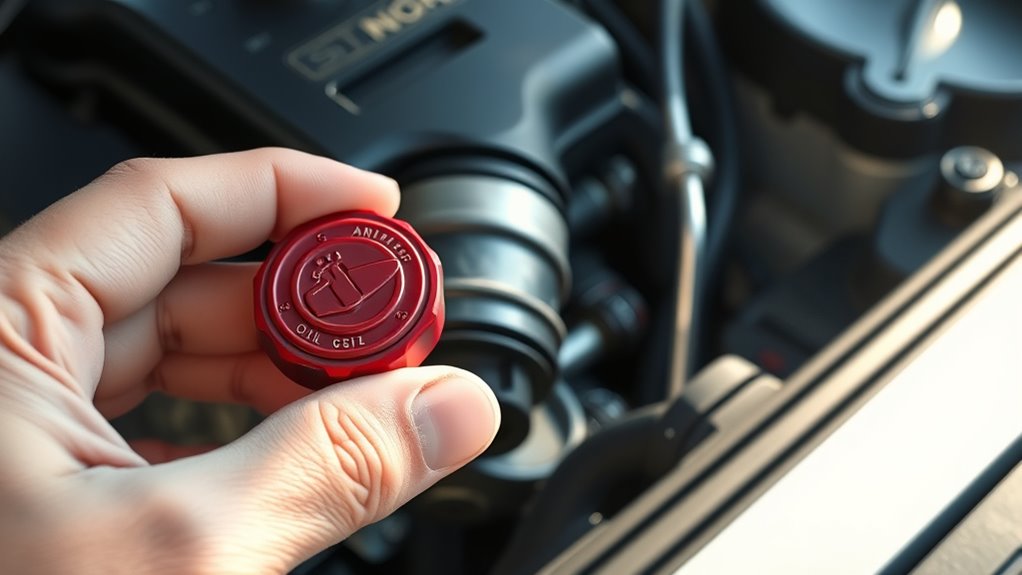
Before you add any oil, you need to locate the oil cap and dipstick under the hood. Open your car’s hood and look for the oil cap. It’s usually marked with an oil can symbol or the word “Oil.” This cap seals the engine’s oil reservoir, so removing it lets you pour new oil in during an oil change.
Nearby, you’ll find the dipstick, a thin metal rod with a looped or colored handle. Pull it out, wipe it clean, then reinsert and remove it again to check your oil level.
While you’re under the hood, it’s a good idea to spot the oil filter too. Although you won’t be handling it now, knowing its location helps during a full oil change when the filter gets replaced to keep your engine running smoothly.
Finding these components is your first step to maintaining your car’s health effectively.
Choose the Right Engine Oil
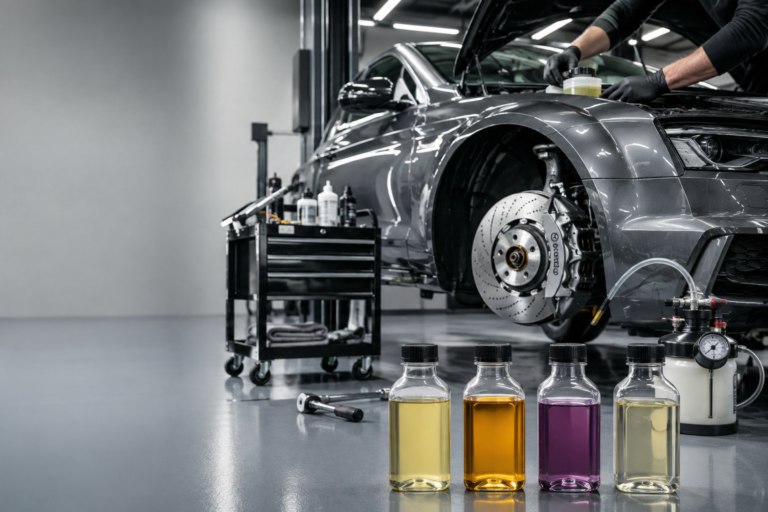
Now that you’ve located the oil cap and checked your oil level, it’s time to pick the right engine oil for your car. Choosing the proper oil depends on factors like oil viscosity and whether you want synthetic vs conventional oil.
Oil viscosity indicates how thick or thin the oil is at different temperatures. This affects engine protection and efficiency.
Here’s a quick guide to help you decide:
| Oil Type | Pros | Best For |
|---|---|---|
| Synthetic | Better performance, lasts longer | High mileage, extreme temps |
| Conventional | Affordable, widely available | Older cars, light driving |
| Blend | Mix of both, balanced benefits | Moderate driving conditions |
Check your owner’s manual for recommended oil viscosity grades, like 5W-30 or 10W-40. Using the right oil guarantees smooth engine operation and protects your car’s longevity.
Check the Current Oil Level
How do you know if your engine has enough oil? The best way is to check the oil level using the dipstick. Park your car on a level surface and wait a few minutes after turning off the engine to let the oil settle.
Pull out the dipstick, wipe it clean, then insert it fully back. Pull it out again and examine the oil level. It should be between the minimum and maximum marks. If it’s low, you’ll need to add oil, keeping in mind your car’s recommended engine oil types.
Regularly checking your oil level helps maintain proper lubrication and prevents engine damage. This simple step complements your oil change scheduling, ensuring you don’t run low between changes. Remember, topping off with the correct oil type protects your engine’s performance and longevity.
Checking the oil level frequently is a quick, essential habit to keep your car running smoothly.
Get Your Car Ready and Open the Oil Cap
Once you’ve confirmed your oil level is low, it’s time to prepare your car for adding oil. Proper preparation guarantees a smooth oil change and helps maintain your engine’s health. Follow these steps to get ready and open the oil cap safely:
- Park your car on a flat, level surface and turn off the engine. Wait a few minutes for the engine to cool down to avoid burns.
- Open the hood by pulling the release lever inside your vehicle, then secure the hood with the prop rod.
- Locate the oil filler cap, usually marked with an oil can symbol or labeled “Engine Oil.”
- Clean the area around the oil cap with a rag to prevent dirt from contaminating the engine during oil maintenance.
Completing these steps carefully sets the stage for adding oil correctly, which is essential for effective engine maintenance and prolonging your car’s life.
Pour Engine Oil Carefully and Check the Level
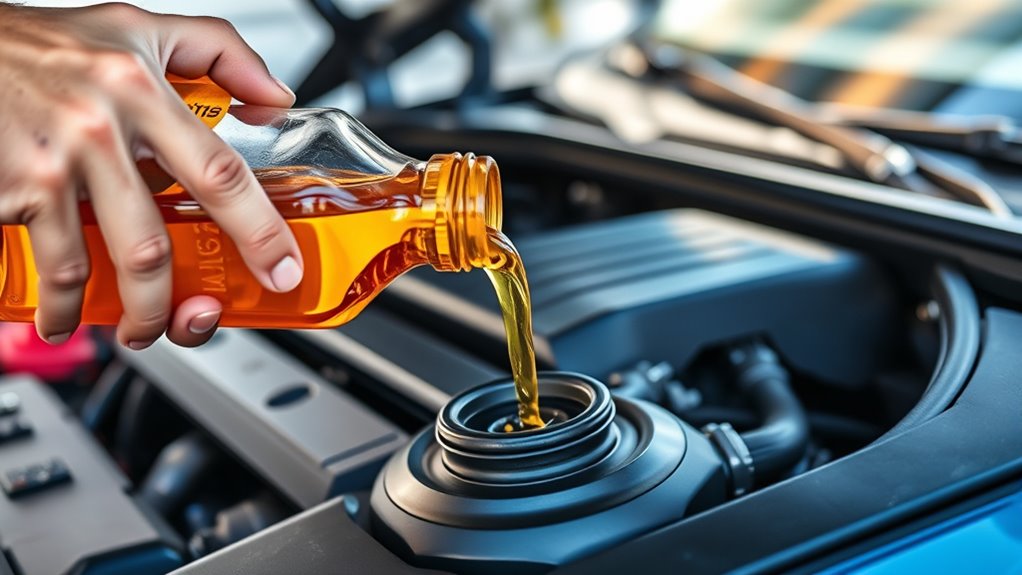
Where should you pour the engine oil to avoid spills and guarantee accuracy? Always pour it slowly into the oil filler hole using a funnel. This helps control the flow and prevents messy spills.
Be mindful of the oil viscosity; thicker oils flow slower, so pour at a steady pace. If your oil includes additives, they’ll blend better when added gradually.
After pouring, wait a minute, then use the dipstick to check the oil level. Pull it out, wipe it clean, reinsert it fully, then pull it out again to see the accurate level.
Add oil in small amounts if needed, as overfilling can harm your engine.
| Step | Tip |
|---|---|
| Use a funnel | Avoid spills and waste |
| Pour slowly | Control oil flow, respect viscosity |
| Check dipstick | Ensure accurate oil level |
| Add incrementally | Prevent overfilling |
Frequently Asked Questions
How Often Should I Change My Engine Oil?
You should change your engine oil every 3,000 to 7,500 miles, depending on your car’s make and oil viscosity. Always check your owner’s manual for specific recommendations.
Don’t forget to replace the oil filter each time to keep contaminants out. Using the right oil viscosity guarantees proper engine lubrication and performance.
Regular oil changes help your engine run smoothly and extend its life, so stay on top of this maintenance task.
What Are the Signs of Low Engine Oil?
You might think low engine oil only triggers a warning light, but that’s not always true. You’ll notice signs like engine noise or overheating caused by reduced oil viscosity, which hampers lubrication.
Oil contamination can darken the oil, making it less effective. If your engine feels rough or you spot oil leaks, check the level immediately. Ignoring these signs can lead to serious damage, so stay proactive and keep an eye on your oil condition.
Can I Mix Different Brands of Engine Oil?
Yes, you can mix different brands of engine oil, but you should be cautious about brand compatibility. Most engine oils meet industry standards, so mixing won’t usually harm your engine.
However, it’s best to avoid mixing oils with different viscosities or specifications, as that can reduce performance. For ideal results, stick to the same brand and type. But if you’re in a pinch, mixing brands temporarily is generally safe.
Is Synthetic Oil Better Than Conventional Oil?
You might wonder if synthetic oil is better than conventional oil, and the truth is, it often is. Thanks to its refined oil composition, synthetic oil offers superior engine protection and performance.
You’ll notice synthetic benefits like improved viscosity, resistance to breakdown, and better cold-start flow. While conventional oil works fine for many, synthetic’s advanced formula helps your engine run cleaner and last longer, especially under extreme conditions.
What Happens if I Overfill Engine Oil?
If you overfill your engine oil, it can cause serious problems. Too much oil increases pressure, which might lead to engine leaks or damage seals.
The oil viscosity can also change under excess pressure, reducing lubrication efficiency. This can cause foaming, making the oil less effective at protecting your engine parts.
You’ll want to drain the extra oil promptly to avoid costly repairs and keep your engine running smoothly.
Conclusion
Now that you know how to put engine oil in your car, it’s as simple as pouring syrup on pancakes. Just take it slow and steady.
Keeping your engine well-lubricated guarantees smooth rides and a longer car life. Regularly checking and topping up oil helps prevent costly repairs down the road.
So, follow these easy steps, and you’ll keep your car running like a dream, ready for every adventure ahead. Remember, knowing how to put engine oil in your car is key to maintaining its performance and longevity.