7 Steps to Get a Kitten Out of a Car Engine Safely
If you’ve ever heard unexpected meowing from under your car hood, you’re not alone. Many people struggle with the worry and uncertainty of a kitten trapped in their car engine. It’s a stressful situation that calls for calm and careful action to ensure the safety of both you and the kitten.
If you suspect a kitten is trapped in your car engine, first turn off the engine and let it cool. Check for signs like meowing or fur, and open the hood slowly.
Speak softly and use treats to gently lure the kitten out. If it doesn’t come right away, don’t force it. Give the kitten time and space while keeping calm.
Before you drive, always inspect the engine, especially in colder months. Keep following these steps to guarantee both your and the kitten’s safety.
Key Takeaways
- Ensure the vehicle is off, cool, and the battery is disconnected before opening the hood. This helps prevent injury to both the kitten and yourself.
- Speak softly and use gentle sounds or treats like cooked chicken to calmly lure the kitten out of the engine compartment.
- Use a flashlight to carefully check dark areas for movement or signs of the kitten without causing sudden noises or movements.
- Gently remove the kitten using gloves or a towel, supporting its body fully, and avoid pulling on its limbs or tail.
- If the kitten doesn’t come out right away, leave the hood open with some food nearby. Give it time to come out safely on its own.
How to Spot a Kitten Trapped in Your Car Engine
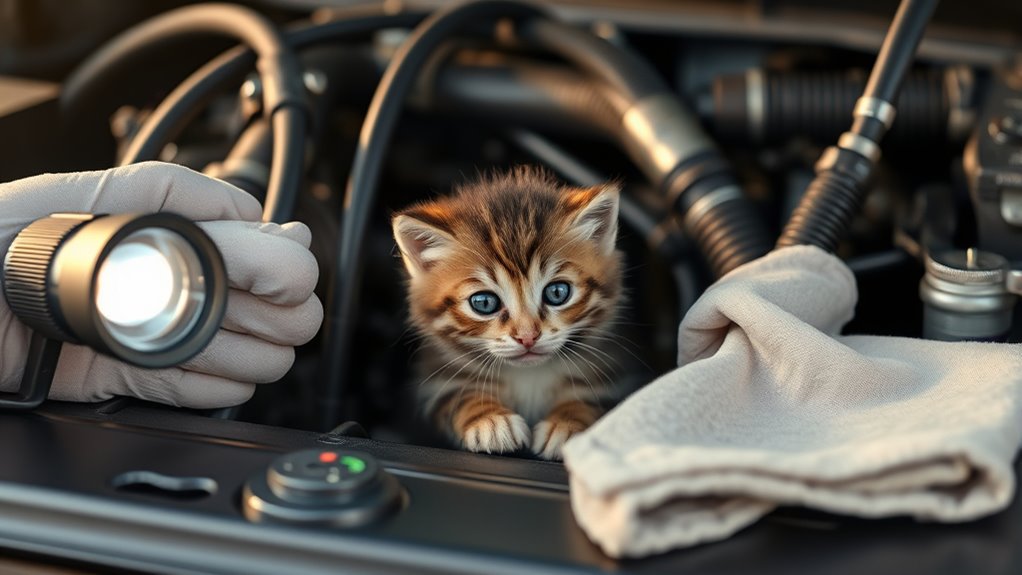
Before you start your car, check for any unusual sounds or movements near the engine. Kittens often hide in warm, cozy spots like your engine compartment, especially on cold days. Look for faint meowing or scratching sounds. If you hear anything, don’t ignore it.
Open the hood carefully and listen closely for rustling. Sometimes, kittens might have dragged cat toys or even remnants from their litter box nearby, clues that help you confirm their presence. You can gently tap on the engine block or shine a flashlight into dark crevices to spot the kitten’s eyes or movement.
Be patient, as sudden noises might scare them deeper inside. If you spot paw prints or fur around the engine bay, that’s another sign. Remember, early detection prevents harm to both you and the kitten, so make this check a habit before every drive.
Safety Steps Before Starting Your Car With a Kitten Inside
If you find a kitten inside your car engine, you must take immediate precautions to guarantee its safety before turning the ignition. First, avoid starting the car, as the engine’s moving parts can cause serious harm.
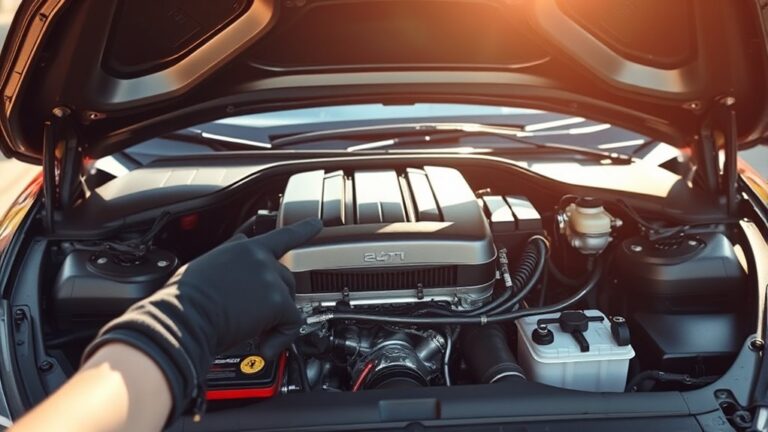
Before any engine maintenance, confirm the vehicle is completely off and cool to prevent burns or injury. Open the hood carefully and check for the kitten’s exact location without sudden movements that might scare it further inside.
Prioritize car safety by securing the area to prevent the kitten from running into traffic or other dangers once freed. Use gloves to protect your hands during the process.
How to Calm and Attract a Kitten in Your Car Engine
To help the kitten feel safe, try speaking softly and playing gentle, soothing sounds nearby. You can also offer some tasty food treats to lure them out without causing any stress. Just remember to keep your movements slow and calm so you don’t startle the little one.
Use Gentle Soothing Sounds
When you need to coax a kitten out of a car engine, using gentle soothing sounds can work wonders. Softly speaking or humming near the engine can help calm the kitten, making it feel safe enough to come out on its own.
Avoid loud noises or sudden sounds that might startle it further inside the engine compartment. Staying calm yourself is key to ensuring pet safety during this emergency preparedness situation.
You can also try playing gentle music or nature sounds at a low volume to attract the kitten’s attention. These soothing noises create a peaceful environment, encouraging the kitten to trust you and move toward a safer spot.
Offer Tasty Food Treats
Offering a few irresistible food treats can quickly grab a kitten’s attention and encourage it to come out of the car engine. You’ll want to use treats that appeal to typical cat behavior, like small pieces of cooked chicken or commercial cat treats with strong aromas.
Place the treats just outside the engine compartment to lure the kitten gently without startling it. This tactic taps into the kitten’s natural food motivation, making it easier to coax them out safely.
Maintain Calm Body Language
Using food treats can attract the kitten’s attention, but your body language plays an just as significant role in keeping it calm and encouraging it to come out. When approaching the engine compartment, move slowly and avoid sudden gestures, as kittens respond strongly to movement and can become startled.
Keep your posture low and non-threatening to align with typical kitten behavior, showing you’re not a danger. Speak softly to reassure the kitten, reducing its stress. Avoid direct eye contact, which might be perceived as a threat.
Staying calm not only soothes the kitten but also guarantees engine safety by preventing sudden escapes or panicked reactions that could lead to injury. Your composed presence helps the kitten feel secure, making it more likely to emerge safely from the engine area.
How to Gently Remove the Kitten From Your Car Engine
Although it can be stressful to find a kitten stuck in your car engine, you can safely remove it by staying calm and moving slowly. Begin your kitten rescue by gently coaxing the kitten with a soft voice, avoiding sudden movements that might frighten it deeper into the engine.
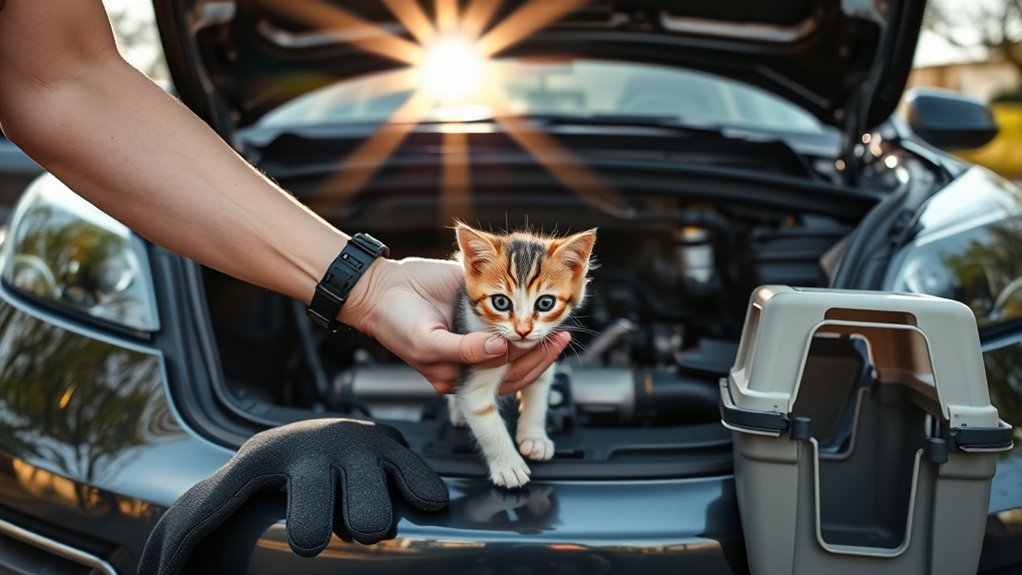
Use a towel or gloves to protect your hands while carefully reaching in. Support the kitten’s body fully as you lift it out, making sure you don’t pull on limbs or tail, which could cause injury.
Keep your focus on engine safety by turning off the car and disconnecting the battery before attempting removal. This prevents accidental starts and electrical hazards.
Once the kitten is free, place it in a warm, secure spot and check for injuries. Your patience and gentle touch during this process are vital for a safe and successful kitten rescue, protecting both the animal and your vehicle.
If the Kitten Won’t Come Out, Here’s What to Try
If the kitten doesn’t respond to your gentle coaxing and won’t come out of the engine, don’t force it. Kittens can be frightened and may hide deeper if they feel threatened. Instead, try to create a calm environment by speaking softly and minimizing loud noises around the car.
Use food or treats as a lure. Kitten behavior often responds well to familiar scents and tastes. Placing a small bowl of wet food or tuna near the engine bay entrance might encourage it to come out on its own.
Offering familiar treats like wet food or tuna can gently coax a kitten from hiding spots.
You can also try leaving the car’s hood open and stepping back to give the kitten time and space. Avoid sudden movements or banging on the engine, as this may cause the kitten to retreat further, complicating your car maintenance efforts.
Patience and gentle encouragement are key to safely retrieving the kitten without causing harm or damage.
How to Check Your Car for Hidden Kittens Before Driving
Where should you look to make sure no kittens are hiding in your car before you start the engine? First, check under the hood, especially the engine compartment. Kittens often seek warmth there. Look carefully around electrical wiring and other nooks.
Then, inspect beneath the vehicle and around the tires. Kittens might hide in wheel wells or undercarriage areas.
Use this quick checklist to guide you:
| Area to Check | What to Look For |
|---|---|
| Engine Compartment | Kittens near electrical wiring or pipes |
| Underneath the Car | Small movements or meowing sounds |
| Wheel Wells & Tires | Warm spots or signs of nesting |
Preventing Kittens From Getting Trapped in Your Car Engine
You can keep kittens from getting trapped by knowing where they like to hide—places like warm engine compartments and wheel wells. Especially during colder months, they’re on the lookout for cozy spots to stay warm. So, it’s a good idea to regularly check under your hood before you start your car to avoid any unexpected surprises.
Common Hiding Spots
Because kittens are naturally curious and seek warmth, they often crawl into tight, hidden spaces around your car. Understanding common hiding spots helps you prevent accidents and keeps your little feline safe.
Keep an eye on their litter box habits and kitten grooming routines; these can hint at restlessness or hiding tendencies.
| Hiding Spot | Why They Choose It | How to Check |
|---|---|---|
| Engine compartment | Warmth from the engine | Open hood, listen for sounds |
| Wheel wells | Dark, enclosed space | Shine flashlight and tap gently |
| Underneath car | Shelter and shade | Look beneath with a mirror |
Regular checks and awareness reduce risks and protect your feline companion from harm.
Seasonal Risk Factors
Noticing where kittens hide around your car helps you spot potential dangers, especially as the seasons change. During seasonal migration, outdoor animals, including feral cats and other wildlife, become more active, increasing the chances that kittens will seek shelter in warm engine compartments.
Wildlife activity spikes in colder months when creatures look for cozy spots, making your car a tempting refuge. You need to be extra cautious during these times, as trapped kittens can suffer severe harm.
Understanding these seasonal risk factors lets you anticipate when kittens are more likely to hide in your engine bay. By staying aware of wildlife patterns and seasonal shifts, you reduce the risk of kittens getting trapped, keeping both them and your vehicle safe throughout the year.
Preventive Engine Checks
How often do you check under your car hood before starting the engine? Regular preventive engine checks are essential not only for engine maintenance but also for keeping curious kittens safe.
Before you start your vehicle, make it a habit to perform quick vehicle inspections, especially during colder months when kittens seek warmth. Look for signs of animal presence like fur or nesting materials near the engine.
Keeping your engine clean and well-maintained reduces hiding spots and makes it less inviting for small animals. If you hear unusual noises after starting your car, stop immediately and check again.
Frequently Asked Questions
Can Other Animals Besides Kittens Get Trapped in Car Engines?
Yes, other animals like squirrels, rabbits, and even birds can get trapped in car engines. When you spot signs of wildlife inside your engine, it’s essential to prioritize engine safety and avoid starting the car.
You should contact a wildlife rescue expert who can safely remove the animal without causing harm to you or the creature. Being cautious helps protect both you and local wildlife.
What Should I Do if the Kitten Is Injured After Removal?
If the kitten is injured after removal, you should perform an injury assessment right away to identify any bleeding, broken bones, or breathing issues. Administer emergency first aid if you can, like stopping bleeding with a clean cloth.
Then, take the kitten to a vet immediately for professional care. Don’t wait, as even minor injuries can worsen quickly. Your quick action can save the kitten’s life and reduce suffering.
Are Certain Car Models More Prone to Kittens Hiding Inside?
Yes, certain car models pose more risks for kittens hiding inside. You’ll find that cars with compact engine designs, tight engine compartments, or lots of nooks and crannies attract curious kittens.
Older models with less insulation or newer models with complex engine layouts can both create perfect hiding spots. So, always check under the hood, especially if your car’s engine design has those cozy, hard-to-see spaces where kittens might crawl in.
How Can I Safely Transport the Rescued Kitten to a Vet?
To guarantee emergency transportation goes smoothly, place the rescued kitten in a secure carrier with soft bedding. You’ll want to keep pet safety top priority by minimizing noise and movement during the drive.
Avoid loud music and sudden stops, and keep the carrier stable. If the kitten seems injured or stressed, call the vet on the way for advice. This way, you’ll help your new friend stay calm and safe.
Is It Safe to Use Ultrasonic Devices to Deter Kittens From Engines?
You might think ultrasonic deterrents are a perfect solution, but they’re not always safe or effective for engine safety. While these devices can discourage kittens, they may also startle them into hiding deeper in the engine, increasing risk.
Plus, some animals don’t react to ultrasound. It’s better to check your engine manually and use gentle noise or vibrations instead. That way, you protect both your kitten and your car.
Conclusion
Remember, a kitten in your engine is like a needle in a haystack, hard to spot but risky to ignore. By staying calm, checking carefully, and gently coaxing the little one out, you’ll keep both your car and the kitten safe.
Always take a moment to look before you start because preventing trouble is better than fixing it later. With patience and care, you can protect these tiny lives and avoid unexpected surprises under your hood.
Following the 7 steps to get a kitten out of a car engine safely will help you handle the situation with confidence and kindness.