How to Find Your Car Engine Size Quickly
Trying to figure out your car’s engine size can be frustrating, especially when you need the info quickly for repairs, upgrades, or resale. You’re not alone—many people struggle with tracking down these details without spending too much time or effort.
Luckily, there are simple ways to find your car engine size fast, so you can get the information you need without the hassle.
You can quickly find your car’s engine size by checking the VIN, usually on the dashboard or driver’s door frame, and using an online decoder for instant details. You might also spot the engine size on an under-hood sticker or the engine block itself.
Your owner’s manual and registration documents often list it clearly too. If unsure, ask a mechanic or dealership for precise info.
Keep exploring to uncover more easy ways to identify your engine size.
Key Takeaways
- Check the VIN on your dashboard or door frame and use an online decoder to reveal engine size quickly.
- Look for engine displacement listed on your vehicle registration or title documents.
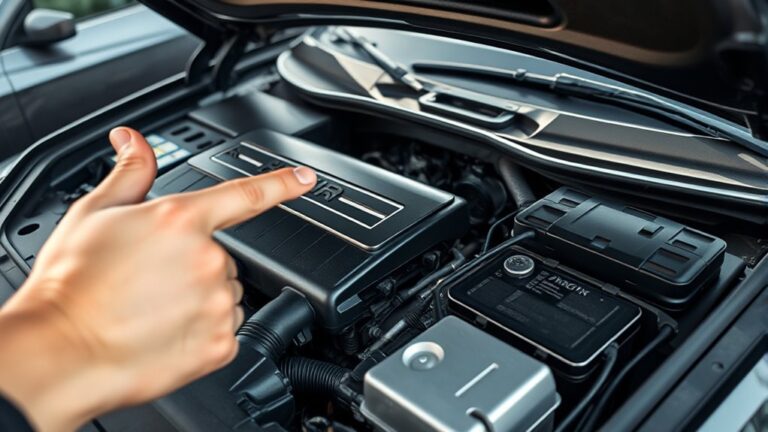
- Locate the under-hood sticker for immediate engine size details near the radiator or under the hood.
- Refer to the engine block markings for direct engine size information after cleaning the surface.
- Consult the owner’s manual’s engine specifications section for precise displacement details.
Why Knowing Your Car’s Engine Size Matters
Although it might seem like just a number, knowing your car’s engine size can considerably impact your driving experience and maintenance decisions. When you understand your engine size, you get a clearer picture of your vehicle’s fuel efficiency. Smaller engines usually consume less fuel, helping you save money on gas, while larger engines might offer more power but often at the expense of higher fuel consumption.
Additionally, your engine size influences the maintenance schedules you need to follow. Different engine sizes require specific types of oil, filters, and service intervals. By knowing your engine size, you can stick to the right maintenance plan, preventing costly repairs and ensuring your car runs smoothly. This knowledge also helps when discussing service needs with mechanics or shopping for parts, making your car ownership experience more efficient and straightforward. Overall, understanding your engine size helps you optimize performance, manage costs, and maintain your vehicle effectively.
Find Engine Size Using the VIN
You can find your engine size by using your car’s VIN, which is usually located on the dashboard or the driver’s side door frame. Once you’ve got the VIN, you can decode the engine information hidden in it.
If you’re looking for a quicker option, there are plenty of online VIN tools that can instantly give you your engine size. It’s pretty straightforward and saves you the hassle of digging through manuals.
Locate Your VIN
Where can you find the Vehicle Identification Number (VIN) on your car? The VIN is essential for vehicle maintenance and car insurance, so locating it quickly helps you get accurate information about your engine size and other details.
Here are four common places to check:
- On the driver’s side dashboard, visible through the windshield.
- Inside the driver’s side door jamb, near the latch.
- On your vehicle’s registration or insurance card.
- In the engine bay, typically on a metal plate or sticker.
Knowing where your VIN is helps you stay organized and informed, especially when scheduling service or handling insurance claims. Once you have the VIN, you’re ready to decode the engine information efficiently.
Decode VIN Engine Information
How can you quickly uncover your car’s engine size using the VIN? The VIN contains a specific character that reveals your engine’s displacement. By decoding this character, you get exact engine size info, which helps you optimize fuel efficiency and plan engine maintenance accurately.
Here’s a simple breakdown of how the VIN engine code might look:
| VIN Character | Engine Type | Engine Size (Liters) |
|---|---|---|
| A | Gasoline | 2.0 |
| B | Diesel | 3.0 |
| C | Hybrid | 1.5 |
Locate the engine code in your VIN (usually the 8th character), then match it to this table. Knowing your engine size supports better fuel efficiency decisions and timely engine maintenance.
Use Online VIN Tools
Although decoding your VIN manually can be helpful, using online VIN tools makes finding your car’s engine size faster and more convenient. These tools quickly decode your VIN, revealing essential engine details that impact fuel efficiency and engine performance. Here’s how to use them effectively:
- Locate your VIN on your car or registration.
- Enter the VIN into a reputable online VIN decoder.
- Review the detailed engine specifications provided.
- Use this information to assess your car’s fuel efficiency and engine performance.
Online VIN tools save you time and reduce errors compared to manual decoding. By using them, you get accurate data that helps you understand your vehicle better, especially when considering maintenance or upgrades. Give these tools a try to simplify finding your engine size with confidence.
Check Engine Size on Registration or Title
Wondering where to find your car’s engine size without popping the hood? One of the easiest ways is by checking your vehicle registration or title documents.
When you look at your vehicle registration, which you likely received when you registered your license plate, you’ll often find detailed information about your car, including the engine size. This information is usually listed under sections like “engine displacement” or “cylinder capacity.”
If you can’t locate your registration, your car’s title might also have this data. These official documents are reliable sources because they’re used by authorities to identify your vehicle’s specifications.
Just grab your registration or title, scan for engine-related terms, and you’ll quickly know your engine size without any hassle. This method saves you time and effort, especially when you don’t have immediate access to the car or its manual.
Keep these documents handy for quick reference anytime you need engine details.
Read Engine Size From the Owner’s Manual
You can find your engine size in the owner’s manual by looking for the engine specifications section. Usually, this part lists the engine displacement details. These numbers typically show the size in liters or cubic centimeters. Knowing what these measurements mean makes it easier to understand your engine’s capacity.
Locate Engine Specifications Section
When you open your car’s owner’s manual, head straight to the engine specifications section to find the exact engine size. This section provides detailed info that’s essential for engine maintenance and optimizing fuel efficiency.
Here’s how to locate it quickly:
- Check the table of contents for “Engine Specifications” or similar headings.
- Flip to the indicated pages or use the index at the back.
- Look for a labeled chart or table listing engine details like size, type, and horsepower.
- Note the engine size, usually expressed in liters (L) or cubic centimeters (cc), to help with maintenance schedules and fuel use.
Identify Engine Displacement Details
Although locating the engine specifications section is a great start, identifying the precise engine displacement requires carefully reading the details provided in your owner’s manual. Look for terms like “engine displacement” or “engine size,” which usually state the volume of all cylinders combined.
This figure directly impacts your car’s engine performance and fuel efficiency, so knowing it helps you understand how your vehicle will behave on the road. The manual may also explain how displacement affects power output and fuel consumption, giving you a clearer picture of what to expect.
Understand Measurement Units Used
Since engine size can be expressed in different units, understanding the measurement system used in your owner’s manual is essential. This helps you accurately determine your engine capacity, which directly affects fuel efficiency.
Here’s what to look for:
- Liters (L): Commonly used worldwide, representing the total volume of all cylinders combined.
- Cubic centimeters (cc): Often found in motorcycles and small cars; 1,000 cc equals 1 liter.
- Cubic inches (ci): Used mainly in the U.S., especially for older or classic vehicles.
- Horsepower or kilowatts: Sometimes listed alongside capacity, indicating engine power, not size.
Find Engine Size on the Under-Hood Sticker
If you pop open your car’s hood, you’ll often find a sticker that holds key details about your engine, including its size. This sticker is usually placed on the underside of the hood or near the engine bay. It provides quick info that helps you understand how your engine size might relate to engine noise and fuel efficiency.
Larger engines often produce more engine noise and may consume more fuel, affecting your fuel efficiency.
Here’s what you might see on the sticker:
| Detail | Description |
|---|---|
| Engine Size | Usually in liters (e.g., 2.5L) |
| Engine Type | Inline, V6, V8, etc. |
| Horsepower | Power output (HP) |
| Recommended Oil | Type and grade for best performance |
Use this sticker as a first stop to quickly identify your engine size without guessing or searching through manuals.
Find Engine Size on Emissions Stickers
You can often find your engine size on the emissions sticker. It’s usually located near the radiator support or the driver’s side door jamb. These stickers include codes that represent your engine’s displacement. So, learning how to decode them is key.
Common formats vary by manufacturer, but they all provide essential engine details you can use. Once you know what to look for, it becomes much easier to identify your engine size right from the sticker.
Location of Emissions Stickers
Where can you find your car’s engine size on emissions stickers? Knowing the emissions sticker placement helps you quickly locate this important info. These stickers are designed with durable materials to withstand heat and weather, so they stay legible over time.
Check these common locations for the emissions sticker on your vehicle:
- Inside the driver’s side door jamb
- Under the hood, near the radiator support or firewall
- On the underside of the hood itself
- Near the front wheel well or fender area
Decoding Engine Size Codes
Although emissions stickers may look like a jumble of letters and numbers, they actually contain specific codes that reveal your car’s engine size. To decode these, look for alphanumeric sequences often labeled with terms like “Displacement” or “Engine Size.” This number usually appears in liters or cubic centimeters (cc). For example, “2.0L” means a 2.0-liter engine.
Alongside engine size, the sticker often provides essential info like recommended engine oil type and tire pressure, helping you maintain your vehicle properly. By understanding these codes, you’ll quickly identify your engine size without guesswork.
Just locate the emissions sticker, scan for the engine displacement code, and note the details for engine oil and tire pressure to keep your car running smoothly.
Common Sticker Formats
Emissions stickers come in various formats, but many share common features that make spotting your engine size easier. These stickers often provide essential info that helps with fuel efficiency checks and engine maintenance planning. Here are four common sticker formats to look for:
- Under the hood near the radiator or firewall: these stickers clearly list engine displacement.
- Driver’s side door jamb: you’ll often find the engine code here, alongside tire and loading info.
- Under the hood near the battery: some manufacturers place emission control info here, including engine size.
- Inside the glove box: occasionally, a sticker here details engine specs and emissions data.
Knowing where to find these stickers can save you time and help guarantee your car runs efficiently.
Spot Your Engine Size on the Engine Block
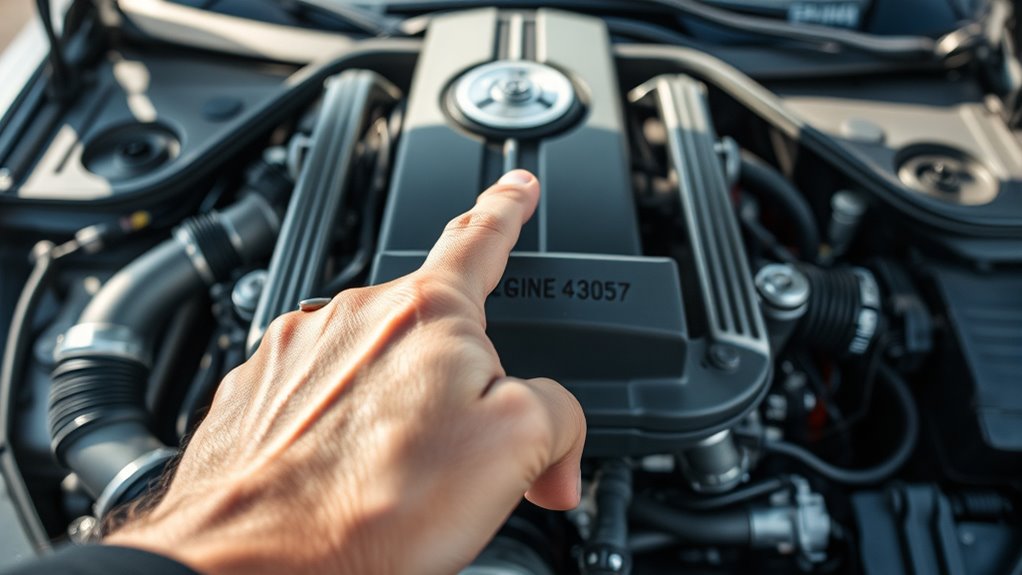
Since the engine block is the heart of your car, you can often find the engine size stamped directly on it. This is an essential step for accurate engine identification. Look closely at the engine block’s surface, usually near the cylinder head or on the side of the block.
The engine marking is often a series of numbers and letters that indicate the engine’s displacement or model code. You might need a flashlight or a rag to clean off dirt and grease to see these markings clearly.
Keep in mind, each manufacturer has a slightly different location and format for their engine markings, so check your car’s manual if you’re unsure where to look. Once you spot the engine identification, jot it down.
This direct method bypasses guesswork and confirms the exact engine size, helping you with maintenance, repairs, or part replacements.
Decode Engine Size Using Online Tools
When you’ve located your engine’s identification numbers, you can quickly decode the engine size using various online tools. These websites and apps help you understand your engine specifications in seconds, which is essential if you’re considering turbo upgrades or want to improve fuel efficiency.
Here’s how to get started:
- Enter your engine’s VIN or serial number into a reliable decoding website.
- Review the detailed engine specs, including displacement and configuration.
- Compare different engine models to see how turbo upgrades might impact performance.
- Check fuel efficiency ratings linked to your engine size for better maintenance choices.
Using these tools saves time and eliminates guesswork. Plus, you’ll gain insights into how engine size correlates with power and fuel economy. Whether you’re upgrading or just curious, online decoding makes it simple to get accurate info without digging through manuals or engine blocks.
Ask Your Dealership or Mechanic for Engine Size
If you’re unsure about your engine size after checking online, don’t hesitate to ask your dealership or trusted mechanic. They have direct access to your vehicle’s specs and can quickly provide the exact engine size. Knowing this detail is crucial for car maintenance and optimizing fuel efficiency, especially when selecting parts or fluids.
Plus, your mechanic can explain how engine size impacts performance and upkeep costs.
Here’s why asking a professional matters:
| Benefit | Why It Matters |
|---|---|
| Accurate Information | Avoid guesswork that can lead to errors |
| Personalized Advice | Tailored tips for your car’s needs |
| Time-Saving | Get quick, reliable answers |
Relying on experts ensures you maintain your car properly and maximize fuel efficiency, saving money and stress in the long run. Don’t hesitate to reach out—it’s the fastest way to get accurate engine size info.
Compare Your Car’s Engine Size by Year and Model
After checking with your dealership or mechanic, you might want to see how your engine size compares across different years and models of the same car. Understanding engine comparison and model variations can help you grasp performance changes and fuel efficiency improvements over time. Here’s how you can do it quickly:
- Identify Your Model Year: Note your car’s year to narrow down the relevant engine options.
- Research Manufacturer Specs: Visit the official website or trusted automotive sites to review engine sizes available for your car’s model year.
- Compare Engine Sizes Across Years: Look for trends in engine displacement changes, noting upgrades or downsizing in newer models.
- Check for Model Variations: Different trims or special editions often feature distinct engines. Compare these to your specific model for accurate insights.
Frequently Asked Questions
How Does Engine Size Affect Fuel Efficiency?
Engine size directly affects fuel consumption because a larger engine capacity usually means your car burns more fuel to generate power. When you have a bigger engine, it consumes more fuel, especially during acceleration or heavy loads.
Smaller engines tend to be more fuel-efficient since they use less fuel for the same distance. So, if you want to save on fuel, choosing a car with a smaller engine capacity often helps reduce your fuel consumption.
Can Engine Size Impact Insurance Premiums?
Yes, engine size can impact your insurance costs. Insurance companies consider factors like engine size because bigger engines often mean higher speeds and increased risk.
If your car has a larger engine, you might pay higher premiums since insurers see it as a greater liability. Conversely, smaller engines usually lower your insurance costs.
What Is the Difference Between Engine Size and Horsepower?
Imagine your car’s engine size as the massive fuel tank fueling a rocket, while horsepower is the actual blast-off power propelling it forward.
Engine capacity measures the total volume inside the cylinders where fuel burns, determining how much fuel your car can handle. Power output, or horsepower, shows how effectively that fuel is converted into speed and strength.
Does Engine Size Determine Vehicle Performance?
Engine size, often called engine capacity or engine displacement, plays a big role in your vehicle’s performance but doesn’t tell the whole story. A larger engine displacement usually means more power and torque, helping your car accelerate faster and tow heavier loads.
However, other factors like turbocharging, engine design, and tuning also affect performance. So, while engine capacity matters, it’s just one piece of the puzzle when judging how your vehicle performs.
How Do Turbochargers Influence Engine Size Perception?
Turbochargers influence engine size perception by boosting smaller engines to perform like larger ones, breaking common engine size myths. You’ll notice turbocharger benefits like increased power and efficiency without adding displacement.
This means you don’t need a big engine to get strong performance. So, when you see a small engine with a turbo, don’t underestimate it. It’s designed to deliver power that rivals bigger engines, changing how you think about engine size.
Conclusion
Knowing your car’s engine size isn’t just a detail. It impacts fuel efficiency, performance, and maintenance costs.
Did you know that nearly 60% of drivers don’t know their engine size? This can lead to costly mistakes when buying parts or services.
By quickly checking your VIN, owner’s manual, or under-hood sticker, you’ll save time and money. Taking these simple steps guarantees you stay informed and get the most from your vehicle every time you hit the road.
Remember, knowing how to find your car engine size quickly makes all the difference in keeping your vehicle in top shape.