How to Clean the Car Engine Bay in 5 Easy Steps
Cleaning your car’s engine bay can feel like a daunting task, and you’re not alone if you find it tricky to get it spotless without causing damage. Many people struggle with knowing where to start or how to avoid harming sensitive parts while still removing grime effectively.
If you want to keep your engine looking great and running smoothly, mastering the basics of engine bay cleaning is key.
To clean your car’s engine bay in five easy steps, start by ensuring the engine is cool, disconnect the battery, and cover sensitive parts with plastic. Use a biodegradable, water-based degreaser along with soft brushes to remove dirt and grease gently.
Rinse carefully with low-pressure water, avoiding electrical components, then dry thoroughly with microfiber towels or compressed air.
Finally, inspect for moisture or damage and apply protectants to prevent corrosion.
Following these basics helps you maintain a spotless, efficient engine bay and there’s more to master for ideal care.
Key Takeaways
- Ensure the engine is cool, disconnect the battery, and cover sensitive components before starting the cleaning process.
- Use biodegradable, water-based degreasers and soft brushes to safely remove dirt and grease from the engine bay.
- Spray degreaser on greasy areas, let it sit, then gently scrub while avoiding electrical parts.
- Rinse with low-pressure water carefully to avoid sensitive parts, then dry thoroughly with microfiber towels or compressed air.
- Inspect for moisture or damage, apply protectants to metal and wiring, and reassemble any removed parts securely.
How to Prepare Your Engine Bay Safely Before Cleaning
Before you start cleaning your engine bay, make sure it’s cool and dry to avoid damage or injury. Hot engine parts can cause burns, and sudden exposure to water might lead to electrical issues.
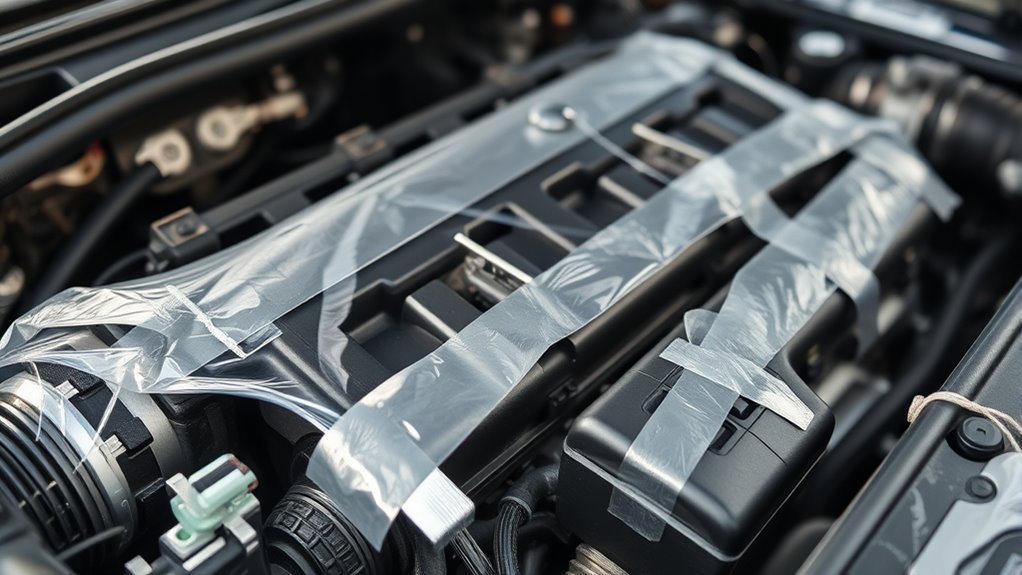
Prioritize engine bay safety by disconnecting the battery’s negative terminal to prevent accidental shorts. Cover sensitive components like the alternator, exposed wiring, and air intake with plastic bags or cling wrap.
Following a regular cleaning schedule not only keeps your engine bay looking good but also helps you spot leaks or worn parts early. Choose a time when your car has been parked for several hours to confirm everything is completely cool.
Ultimately, remove any debris, leaves, or loose dirt from the surface before applying any cleaner. By preparing your engine bay safely and sticking to a cleaning schedule, you’ll protect your vehicle and make the cleaning process more effective and stress-free.
Choose the Right Tools and Cleaners for Your Engine Bay
When you start cleaning your engine bay, choosing the right tools and cleaners makes the job safer and more effective. First, gather essential engine bay accessories like soft brushes, microfiber cloths, and a quality spray nozzle to control water flow. These tools help you reach tight spots without damaging components.
For chemical selection, pick cleaners specifically designed for engine bays. They’re tough on grime but gentle on sensitive parts. Avoid harsh chemicals that can corrode metal or degrade rubber and plastic. Look for biodegradable, non-toxic formulas that break down grease without leaving residue.
Also, consider degreasers that are water-based for easier rinsing. Using the right combination of tools and chemicals prevents damage and guarantees a thorough clean, setting you up perfectly for the next steps. Remember, a careful approach here minimizes risks and protects your engine’s performance and appearance.
Remove Dirt and Grease From Your Engine Bay Safely
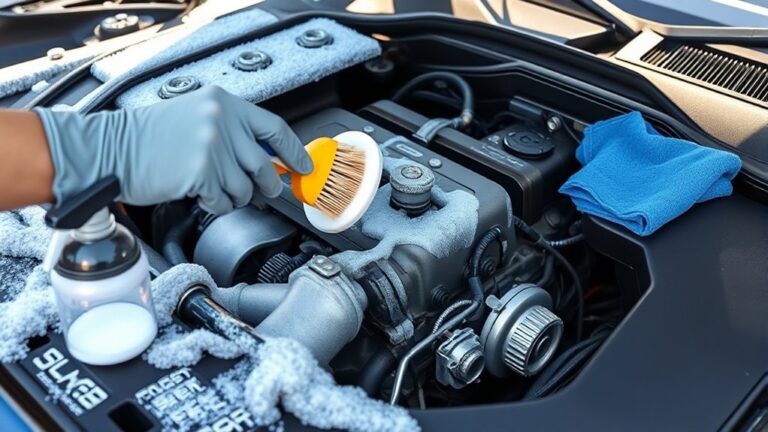
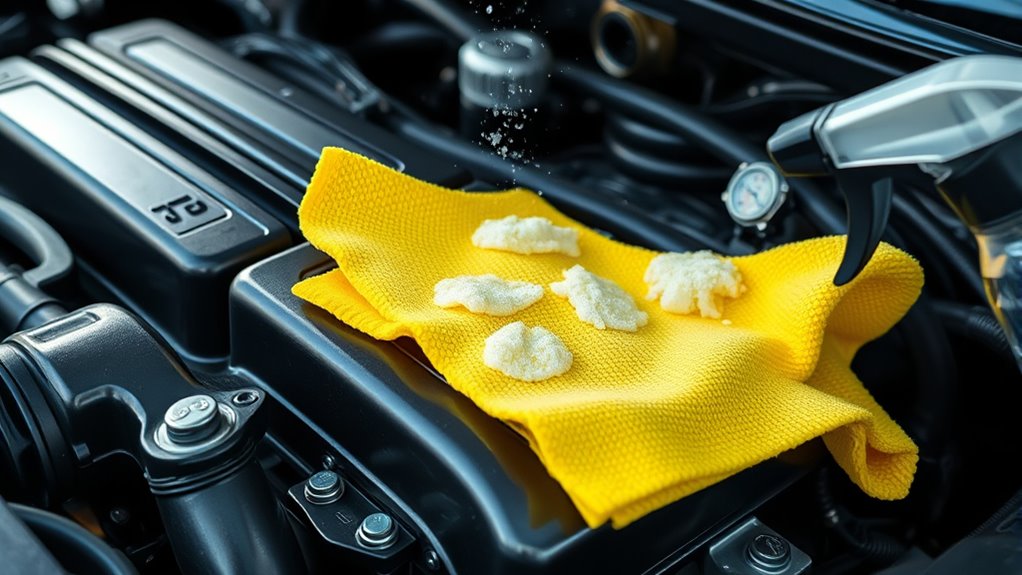
Now that you’ve gathered the right tools and cleaners, it’s time to tackle the dirt and grease buildup in your engine bay. Start by spraying a degreaser on greasy spots, avoiding sensitive engine bay accessories like electrical components.
Let it sit for a few minutes to break down grime without risking engine bay corrosion. Use a soft brush to gently scrub areas with stubborn dirt.
Here’s a quick guide to removing dirt and grease safely:
| Task | Tips |
|---|---|
| Apply Degreaser | Spray evenly, avoid delicate parts |
| Scrub Dirt | Use soft brushes to prevent damage |
| Protect Accessories | Cover exposed wiring and sensors |
Rinse and Dry Your Engine Bay Thoroughly
Since leftover cleaner and grime can cause damage if left behind, you’ll want to rinse your engine bay carefully to wash away all residues. Use a gentle, low-pressure hose spray to avoid forcing water into sensitive components. Focus on areas where dirt tends to cling but be mindful of electrical connections.
Proper engine bay ventilation is essential during this step to help moisture evaporate quickly, preventing corrosion or electrical issues.
After rinsing, dry your engine bay thoroughly using microfiber towels or compressed air, paying close attention to tight spaces and connectors. This prevents water spots and potential rust.
Don’t forget battery terminal maintenance. Make sure terminals are dry and free from corrosion before reconnecting. If needed, apply a protective spray to terminals to keep them clean and functioning well.
Taking these careful steps guarantees your engine bay remains clean without risking damage from moisture or leftover grime.
Check Your Engine and Keep It Protected After Cleaning
After finishing the cleaning process, you should carefully inspect your engine for any signs of damage or leftover moisture that could cause issues. Look closely at electrical connections and sensitive components to verify they’re dry and intact. Using compressed air can help remove trapped water in hard-to-reach spots.
Next, apply a suitable protectant designed for engine bay preservation; this not only improves the appearance but also creates a barrier against dirt and grime buildup. Engine corrosion prevention is vital, so focus on metal parts and exposed wiring by treating them with anti-corrosive sprays or coatings.
Finally, double-check fluid levels and tighten any loose clamps or bolts you may have disturbed during cleaning. By following these steps, you’ll maintain a clean engine bay that’s well protected against future damage, helping your car run smoothly and extending its overall lifespan. Regular checks and proper protection keep your engine in top shape.
Frequently Asked Questions
Can I Clean My Engine Bay With a Pressure Washer?
You can clean your engine bay with a pressure washer, but you should be careful. Pressure washer risks include damaging sensitive electrical components or forcing water into areas that could cause corrosion.
For safe engine bay detailing, avoid using high pressure directly on connectors, sensors, or exposed wiring. Instead, use a gentle spray, cover sensitive parts, and dry thoroughly afterward.
This approach keeps your engine bay clean without causing damage.
How Often Should I Clean My Engine Bay?
You should clean your engine bay every six months to a year. Just like you wash your car’s exterior and check your oil, you need to tackle engine grime and battery corrosion regularly.
This routine keeps your engine looking sharp and running smoothly. It also prevents buildup that can cause damage.
If you drive in dusty or wet conditions, consider cleaning more often to stay ahead of grime and corrosion’s harmful effects.
Is It Safe to Clean an Engine Bay in Cold Weather?
Yes, you can clean your engine bay in cold weather, but you need to be cautious. Make sure the engine temperature is cool before starting to avoid thermal shock.
Use chemicals designed for engine cleaning that are safe in low temperatures to prevent damage. Also, avoid spraying water directly on electrical components. Taking these steps guarantees chemical safety and protects your engine from potential harm during cold-weather cleaning.
Can Engine Bay Cleaning Improve My Car’s Performance?
Yes, cleaning your engine bay can boost engine efficiency by up to 10%. When grime and debris build up, they can cause your engine to overheat or work harder, reducing fuel economy.
What Should I Avoid When Cleaning the Engine Bay?
You should avoid spraying water directly on sensitive electrical components to prevent electrical hazards. Don’t use harsh chemicals that can cause engine damage or degrade rubber and plastic parts.
Avoid high-pressure washers, as they can force water into connectors and cause shorts. Also, never clean the engine when it’s hot; sudden cooling can lead to damage. Taking these precautions helps keep your engine bay safe and functioning properly.
Conclusion
Just like a knight readies their armor before battle, you’ve prepared your engine bay for a thorough clean. By choosing the right tools, removing grime carefully, and drying every inch, you guarantee your engine runs smoothly and looks sharp.
Remember, a well-maintained engine bay isn’t just about looks. It’s about protecting your car’s heart. Keep it clean and keep it protected, and your engine bay will reward you with reliable performance for miles to come.