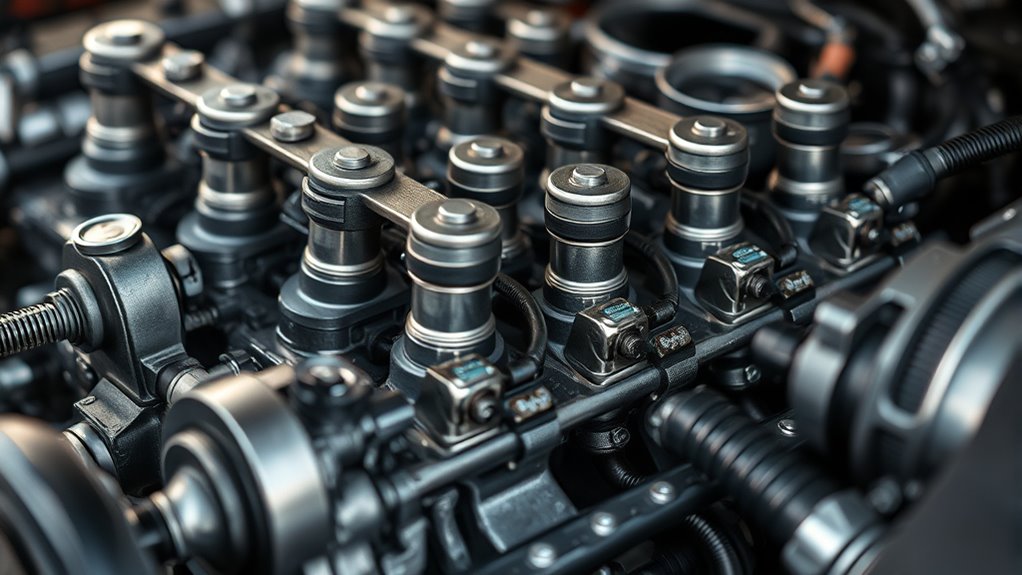
How a Car Engine Works Step by Step
If you’ve ever wondered why your car sometimes feels less powerful or struggles to start, you’re not alone. Many people struggle to understand what’s going on under the hood.
Knowing how a car engine works can help you feel more confident about maintenance and troubleshooting.
Your car engine pulls air through a filter and mixes it with fuel injected precisely into the combustion chamber. Spark plugs ignite this mix, causing an explosion that pushes pistons down, turning the crankshaft and creating motion.
Exhaust gases exit through the exhaust system while coolant and oil work to keep the engine cool and lubricated.
Timing parts keep everything in sync for smooth operation. Keep exploring to uncover how each system works together seamlessly.
Key Takeaways
- Air and fuel mix in the combustion chamber, where spark plugs ignite the mixture to start the combustion process.
- The burning fuel pushes the piston down, converting chemical energy into mechanical power that turns the crankshaft.
- Exhaust valves open to expel burned gases through the exhaust system, reducing pollutants via the catalytic converter.
- The cooling system circulates coolant through the engine and radiator to absorb and dissipate heat, preventing overheating.
- Engine oil lubricates moving parts, reducing friction and wear, while sensors and the ECU optimize performance and emissions.
What a Car Engine Does: Turning Fuel Into Motion
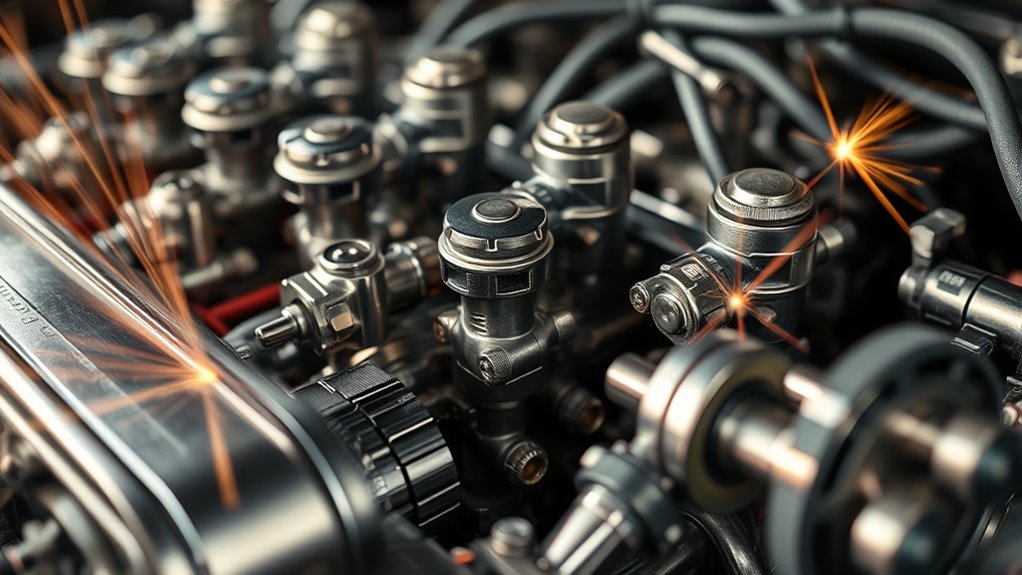
Although it might seem complex, your car engine’s main job is straightforward: it turns fuel into motion. When you start your car, the engine ignites fuel inside its cylinders, creating small explosions. This process generates power that moves pistons up and down, which then spins the crankshaft.
The crankshaft’s rotation ultimately drives your wheels, making your car move. You might notice engine noise during this process; that’s the sound of combustion and moving parts working together. While some noise is normal, excessive engine noise can signal a problem.
Your engine also focuses on fuel efficiency, aiming to get the most motion from each drop of fuel. Better fuel efficiency means you spend less at the pump and produce fewer emissions. So, your engine balances power and fuel use, ensuring your car runs smoothly and economically every time you drive.
How Air and Fuel Get Into the Engine
How exactly do air and fuel find their way into your engine? It starts with the air intake system pulling in fresh air, which then passes through an air filter to keep out dirt and debris.
Simultaneously, fuel is drawn from the tank and delivered via fuel injectors, which spray a precise amount of fuel into the intake manifold or directly into the combustion chamber. This careful mixing ensures maximum fuel efficiency by providing the right air-to-fuel ratio.
Fuel injectors deliver precise amounts of fuel, ensuring optimal air-to-fuel mix for peak efficiency.
Modern engines use sensors and an engine control unit (ECU) to adjust this mixture in real-time, balancing power output with emissions control. By regulating how much air and fuel enter the engine, your car reduces harmful pollutants while maximizing performance.
This system not only helps your engine run smoothly but also complies with environmental standards, making your drive cleaner and more efficient. Understanding this process gives you insight into one critical step before combustion even begins.
What Happens Inside the Combustion Chamber
Once the air and fuel mixture enters the combustion chamber, it’s time for a powerful transformation. This space, also known as the ignition chamber, is where the combustion process takes place. Inside, the mixture is compressed by the piston, increasing its pressure and temperature. This prepares the fuel and air for ignition, setting the stage for energy release.
During the combustion process, the fuel rapidly burns, producing expanding gases. These gases push the piston down, converting chemical energy into mechanical energy that drives the engine. The ignition chamber’s design guarantees efficient burning, maximizing power while minimizing waste.
You’ll find that everything inside the combustion chamber happens quickly and precisely. Understanding this process helps you appreciate how the engine converts simple fuel and air into motion, powering your vehicle forward.
How Spark Plugs Ignite the Fuel
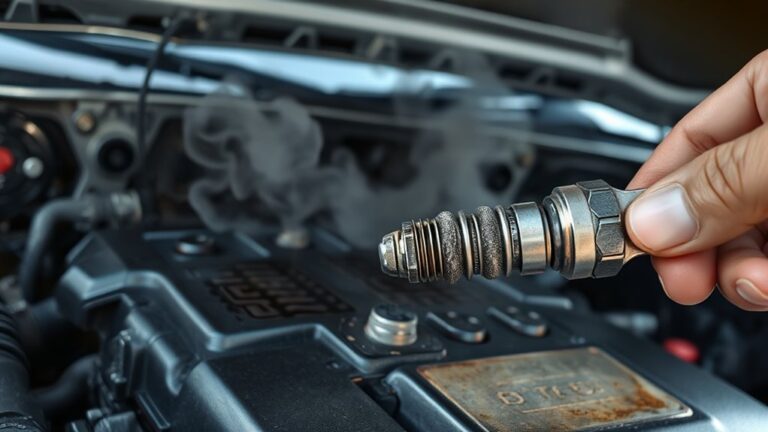
Because the fuel-air mixture needs a precise spark to ignite, spark plugs play an essential role in starting the combustion process. When the engine’s ignition system sends a high voltage to the spark plug, it creates a tiny, controlled spark that ignites the mixture inside the combustion chamber. This spark must occur at exactly the right moment, known as ignition timing, to maximize engine efficiency and power.
The spark plug design directly affects how well this ignition happens. Its electrodes are engineered to withstand extreme heat and pressure while delivering a consistent spark. Modern spark plugs often use materials like iridium or platinum for durability and improved conductivity.
When you maintain proper ignition timing and use the right spark plug design, your engine runs smoothly and efficiently. Any delay or misfire disrupts combustion, leading to reduced performance or increased emissions. So understanding how spark plugs ignite the fuel helps you appreciate their fundamental role in your car’s engine.
How Pistons Turn Explosions Into Motion
The spark plug ignites the fuel-air mixture, creating a powerful explosion inside the combustion chamber. This sudden burst pushes the piston down with tremendous force. Thanks to careful piston design, which maximizes surface area and withstands high pressure, the piston efficiently converts this energy into mechanical motion.
As the piston moves, it turns the crankshaft, transforming the up-and-down motion into rotational power that drives your car’s wheels. Combustion efficiency plays a vital role here; the more complete the fuel burns, the stronger and more consistent the force pushing the piston.
Modern pistons are engineered to optimize this process, reducing energy loss and improving power output. So, every explosion’s energy is effectively harnessed, making your engine run smoothly and powerfully. Understanding this interaction helps you appreciate how those tiny explosions keep your vehicle moving forward.
How Exhaust Gases Are Pushed Out
After the piston completes its power stroke, it moves back up to push exhaust gases out of the cylinder. As the piston rises, the exhaust valve opens, creating a path for the burnt gases to escape.
These gases flow through the exhaust system, which directs them safely away from the engine and your vehicle’s cabin. The exhaust system also includes components like the catalytic converter, which plays a key role in emission control by reducing harmful pollutants before the gases exit the tailpipe.
This process prevents toxic fumes from polluting the air and helps your car meet environmental standards. You’ll find that the smooth removal of exhaust gases is vital. It clears the cylinder for the next intake stroke, ensuring your engine runs efficiently.
Without this step working properly, performance drops, and emission control suffers, leading to increased pollution and possible engine damage.
How the Timing Belt or Chain Keeps Everything in Sync
Although you might not see it working, the timing belt or chain plays an essential role in keeping your engine’s moving parts perfectly synchronized. This timing synchronization ensures that the camshaft and crankshaft rotate in harmony, allowing valves to open and close at the right moments during each engine cycle.
If this sync is off, your engine may misfire or suffer damage.
You need to pay close attention to belt maintenance since a worn or broken timing belt can lead to costly repairs. Regular inspections and replacements based on your vehicle’s schedule keep everything running smoothly.
| Component | Function | Maintenance Tip |
|---|---|---|
| Timing Belt/Chain | Synchronizes engine parts | Replace every 60,000-100,000 miles |
| Tensioner | Keeps belt tight | Check tension regularly |
| Camshaft & Crankshaft | Work in sync | Ensure timing marks align |
How the Cooling System Protects the Engine
You rely on the cooling system’s key parts—like the radiator and water pump—to keep your engine from overheating. It works by moving coolant through the engine, where it soaks up heat. Then, it releases that heat outside.
Knowing how this process works can help you understand how your engine stays safe, especially during those long drives. It’s pretty neat how all the pieces come together to protect your engine.
Cooling System Components
How does the cooling system keep your engine from overheating? It uses several key components working together. The radiator circulates coolant to absorb the heat generated, while the water pump pushes this coolant through the engine block, preventing damage to crucial parts like the engine lubrication system.
The thermostat regulates coolant flow, ensuring the engine reaches ideal temperature quickly without overheating. Fuel injection also plays a role by controlling fuel delivery, helping maintain efficient combustion and reducing excess heat.
Furthermore, hoses connect the system, and fans assist in cooling the radiator when your car slows down or idles. Together, these components maintain a balance, protecting your engine from heat damage and keeping it running smoothly every time you drive.
Heat Dissipation Process
Why does your engine stay cool even under intense driving conditions? It’s all about efficient heat transfer and thermal regulation. Your cooling system circulates coolant through engine parts, absorbing excess heat.
This heated coolant then moves to the radiator, where heat dissipates into the air, preventing overheating. Fans and airflow speed up this process, maintaining stable temperatures.
Here’s how heat dissipation works in your cooling system:
| Component | Function | Role in Heat Transfer |
|---|---|---|
| Coolant | Absorbs heat | Transfers heat from engine |
| Radiator | Releases heat | Allows heat to escape |
| Fan | Boosts airflow | Speeds up heat dissipation |
This cycle ensures your engine runs smoothly without damage from overheating.
How Engine Oil Keeps Moving Parts Safe
Although engine components move rapidly and generate intense heat, engine oil continuously circulates to protect them from damage. Engine lubrication is essential because it forms a thin, slippery film between moving parts, preventing metal-to-metal contact. This reduces wear and tear, ensuring your engine runs smoothly.
Engine oil forms a protective film that reduces friction and wear, keeping your engine running smoothly.
The oil’s viscosity, or thickness, plays a key role. It must be just right to flow easily at low temperatures and still protect parts under high heat.
When you think about how engine oil works, imagine it:
- Sliding smoothly between pistons and cylinder walls
- Coating crankshafts to reduce friction
- Seeping into tiny crevices to prevent corrosion
- Absorbing heat to help cool components
- Carrying away dirt and metal particles to the oil filter
How All Engine Parts Work Together to Power Your Car
Engine oil plays a vital role, but it’s just one piece of the puzzle. Your car’s engine is a finely tuned system where parts like the pistons, crankshaft, spark plugs, and fuel injectors work in harmony.
When you turn the key, fuel mixes with air and ignites, pushing pistons down. This motion turns the crankshaft, converting energy into mechanical power that moves your car.
The fuel injectors and spark plugs guarantee combustion is efficient, directly impacting fuel efficiency. Meanwhile, components like the catalytic converter handle emission control, reducing harmful gases before they exit the exhaust.
Your engine’s timing belt keeps everything synchronized, preventing costly damage. Cooling systems maintain ideal temperatures, while sensors constantly adjust operations for smooth performance.
Frequently Asked Questions
How Often Should I Change My Engine Oil?
You should change your engine oil every 5,000 to 7,500 miles if you’re using synthetic oil, which lasts longer than conventional oil. Don’t forget to replace the oil filter at the same time to keep your engine clean and running smoothly.
If you drive in extreme conditions, like lots of stop-and-go traffic or dusty roads, you might need to change it more often. Always check your owner’s manual for specific recommendations.
What Causes Engine Knocking or Pinging Sounds?
You might think engine knocking or pinging comes from a simple mechanical fault, but it mostly happens when ignition timing is off or you use fuel with too low an octane rating.
When the spark ignites the air-fuel mix too early, or the fuel resists combustion poorly, it causes uneven pressure and those annoying noises. Adjusting your ignition timing and using the right octane fuel usually stops the knocking.
How Can I Improve My Car’s Fuel Efficiency?
You can improve your car’s fuel efficiency by following simple fuel saving tips like maintaining proper tire pressure, avoiding rapid acceleration, and reducing excess weight. Consider eco friendly modifications such as installing a more efficient air filter or switching to synthetic oil.
Regularly servicing your engine and using the recommended fuel grade also helps. These steps save gas and reduce emissions, making your driving both economical and environmentally friendly.
What Are Common Signs of Engine Overheating?
Did you know that nearly 40% of engine failures are due to overheating? You’ll notice common signs like a rising radiator temperature gauge or steam coming from under the hood.
Coolant leaks are another warning. You might spot puddles or drops beneath your car. If your engine feels unusually hot or you smell burning, don’t ignore it.
Catching these signs early can save you from costly repairs and keep your engine running smoothly.
How Do Turbochargers Affect Engine Performance?
Turbochargers increase your engine’s performance by forcing more air into the combustion chamber, creating a higher turbo boost. This extra air lets you burn more fuel, which boosts power output.
Because of this, your engine effectively operates at a higher compression ratio without physically changing it, improving efficiency and power. You’ll notice quicker acceleration and better overall performance, especially in smaller engines designed to maximize turbo boost benefits.
Conclusion
Just like a symphony where each instrument plays its part perfectly, your car engine turns fuel into motion with precise harmony. You’ve seen how air, fuel, spark, and moving parts work together seamlessly, like a well-rehearsed dance, to power your ride.
By understanding this intricate process, you’re not just a driver; you’re a conductor of mechanical magic, keeping your engine running smoothly and your journey unstoppable. Knowing how a car engine works helps you appreciate the power under your hood every time you hit the road.