7 Tips to Keep Rats Out of Your Car Engine
Dealing with rats nesting in your car engine is a frustrating problem that many people struggle with. You’re not alone if you’ve found gnaw marks, droppings, or damaged wires under your hood. It’s a common issue that can lead to costly repairs and a lot of stress.
To keep rats out of your car engine, start by spotting early signs like droppings or gnaw marks and remove any nearby food sources. Park in open, well-lit areas away from dense vegetation, and seal any entry points around your engine with durable materials.
Use natural repellents like peppermint oil and inspect your car regularly for damage. If rats persist, consider professional pest control to protect your vehicle long-term. You can uncover more effective tips to safeguard your engine here.
Key Takeaways
- Seal all gaps and entry points around the hood, firewall, and wiring with durable automotive-grade materials to block rat access.
- Remove food sources by securing pet food, birdseed, and trash away from parking areas to avoid attracting rodents.
- Park in well-lit, open spaces away from dense vegetation to reduce hiding spots and discourage rat nesting near your vehicle.
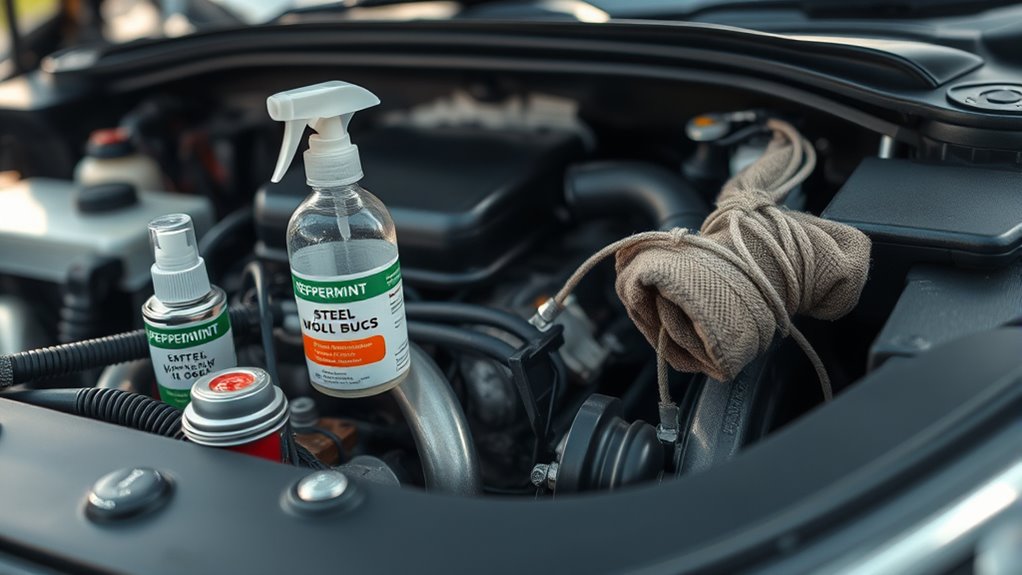
- Use natural repellents like peppermint oil sprays or sachets of cedar chips around the engine bay to deter rats.
- Regularly inspect the engine compartment for droppings, gnaw marks, or nesting signs and address any damage promptly.
Identify Early Signs of Rats in Your Car Engine
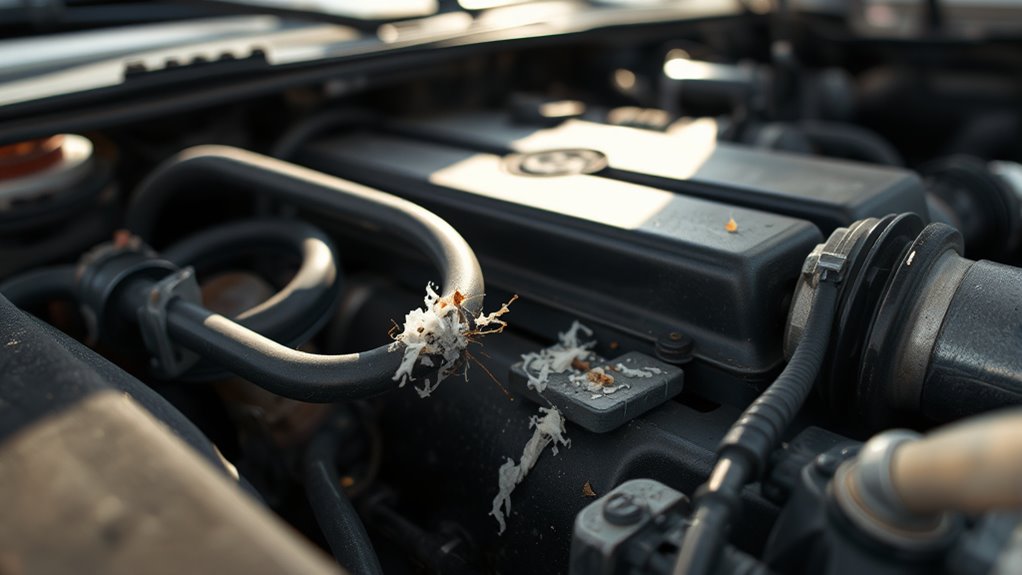
How can you tell if rats have taken up residence in your car engine? Start by using scent detection; a strong, musky odor often signals their presence. You might notice this smell lingering around the engine bay or under the hood.
Next, perform a thorough droppings examination. Rat droppings are small, dark, and pellet-shaped, usually found near wiring, hoses, or other secluded spots within the engine compartment. Spotting these is a clear warning sign.
Check for small, dark, pellet-shaped droppings near wires or hoses inside the engine compartment.
Furthermore, listen for scratching or scurrying sounds, especially after dark or early morning. Check for signs of gnawing on wires or rubber components, as rats often chew to keep their teeth sharp.
Early identification through these methods lets you act quickly before damage escalates, saving you costly repairs. By regularly inspecting your car engine with scent detection and droppings examination, you’ll catch rat activity early and keep your vehicle safe.
Remove Food Sources Around Your Vehicle
Since rats are drawn to easy meals, removing food sources around your vehicle is essential to keeping them away. Start by securing all food storage containers, both inside your home and garage, ensuring they’re sealed tightly and kept off the floor.
Avoid leaving pet food or birdseed near your car, as these attract rodents. Proper trash management plays a key role too. Use bins with tight-fitting lids and empty them regularly to prevent odors that lure rats.
Don’t let garbage accumulate or spill around your parking area. Clean up any food crumbs or spills promptly, especially if you often eat near your car. By eliminating these food sources, you make your vehicle a less attractive spot for rats to nest or forage.
This simple step greatly reduces the chances of rats taking up residence in your car engine area, helping you avoid damage and costly repairs.
Park Strategically to Deter Rats From Your Car
You can keep rats away by parking your car in open, well-lit areas where they feel exposed. It’s a good idea to avoid spots near thick vegetation or bushes since those provide shelter and hiding places for them. Picking the right parking spot really makes your car less inviting to these pesky critters.
Choose Open, Well-Lit Areas
When you park in open, well-lit areas, you reduce the chances of rats sneaking into your car engine. Rats prefer dark, secluded spots where they feel safe, so your parking habits play a vital role in deterring them.
Choosing locations with strong lighting conditions exposes your vehicle to natural or artificial light, making it less inviting for rodents. This simple change can markedly lower the risk of infestations.
Avoid parking in shadowy corners or under dense structures that provide cover for rats. Instead, opt for spaces where visibility is clear and activity is frequent.
Avoid Vegetation Nearby
Several types of vegetation can attract rats and provide them easy access to your car. When you park near dense shrubs, tall grass, or overgrown bushes, you’re basically giving rodents a cozy hiding spot close to your vehicle.
To prevent this, stay on top of garden maintenance by regularly trimming your landscape. Keep grass short and remove any piles of leaves or debris where rats might nest. By maintaining a tidy outdoor space, you reduce the chances of rats lurking nearby.
When choosing a parking spot, avoid areas surrounded by thick vegetation. Instead, opt for clear, open spots that don’t offer rodents shelter. Taking these steps helps keep your car less inviting to rats and protects your engine from damage.
Seal Entry Points to Keep Rats Out of Your Engine
First, take a look around your engine to find the usual spots where rats like to sneak in. Once you’ve identified those openings, grab some durable sealant and block them up tightly. And don’t forget—check your seals now and then to make sure they’re still holding strong and keeping those rodents out.
Identify Common Entry Points
You’ll want to carefully inspect at least three common entry points where rats sneak into your car engine: gaps around the hood, openings near the firewall, and spaces around wiring or hoses. Rats often exploit these areas to access the engine block, where they can nest undisturbed.
Don’t forget to check the air intake system, as its openings provide another easy route inside. Look for small holes or cracks that might seem insignificant but are large enough for rodents to squeeze through.
You should also examine rubber grommets and seals around cables and hoses since these can deteriorate over time, creating access points. Identifying these vulnerabilities is your first step to keeping rats out and protecting your engine’s essential components from damage.
Use Durable Sealants
Although identifying entry points is essential, sealing them effectively keeps rats from slipping into your engine in the first place. When choosing a sealant, prioritize sealant durability to guarantee long-lasting protection against gnawing and weather. Also, consider material compatibility to avoid damaging your car’s surfaces or causing sealant failure.
Follow these tips for best results:
- Select sealants designed for automotive use, as they offer strong adhesion and resist temperature changes.
- Avoid sealants that react poorly with rubber, plastic, or metal parts in your engine bay.
- Apply sealant generously around gaps and cracks, smoothing it out to create a continuous barrier.
Inspect Seals Regularly
Since sealants can wear down over time, you should inspect them regularly to assure rats don’t find new ways into your engine. Make seal maintenance a routine part of your car care by closely examining all seals, gaskets, and rubber components.
Look for cracks, gaps, or any signs of deterioration that could create entry points. Performing quick leak detection checks helps you spot weaknesses before pests exploit them. If you notice any damage, replace or repair the seals promptly to maintain a tight barrier.
Regular inspections not only keep rats out but also prevent moisture and dirt from entering, protecting your engine’s performance. Staying proactive with seal maintenance ensures your vehicle remains a rat-free zone, saving you from costly repairs and unpleasant infestations.
Use Natural Repellents to Deter Rats From Your Car
When rats invade your car engine, natural repellents can effectively keep them at bay without harmful chemicals. Using herbal sprays and other natural deterrents offers a safe way to protect your vehicle. Here’s how you can use them:
- Apply Herbal Sprays: Spritz herbal sprays containing peppermint, eucalyptus, or citronella around the engine bay. These scents repel rats and discourage nesting.
- Place Natural Deterrents: Use sachets filled with dried lavender, cloves, or cedar chips near entry points. These strong aromas make your car less inviting.
- Use Essential Oils: Soak cotton balls in essential oils like peppermint or tea tree oil and tuck them in corners. Refresh them weekly to keep them effective.
Regularly Inspect Your Car Engine for Rat Damage
If you want to catch rat damage early, you need to inspect your car engine regularly. Rats can chew through wires, hoses, and insulation, causing serious issues that affect engine cooling and overall performance.
Start by opening the hood and looking for signs like gnaw marks, nests, or droppings. Pay close attention to wiring and rubber components, as rats often target these.
Check for any oil leakage, which could indicate damaged seals or hoses caused by rodents. Engine cooling problems might arise if rats damage the radiator or coolant lines, leading to overheating.
Listen for unusual noises when the engine runs, as damaged parts may cause rattling or hissing sounds.
Use Professional Pest Control for Persistent Rat Infestations
Though you might try DIY methods to deter rats, persistent infestations often require professional pest control services to effectively eliminate the problem and protect your car engine from further damage. When rat infestations persist, relying on a professional pest team guarantees thorough treatment and long-term prevention.
DIY methods may help, but persistent rat infestations need professional pest control for effective, lasting protection.
Here’s why you should consider professional pest control:
- Expert Assessment Professionals identify entry points and nesting areas you might miss.
- Targeted Solutions They use safe, effective treatments tailored to your situation.
- Ongoing Monitoring Regular follow-ups prevent rats from returning and causing new damage.
Frequently Asked Questions
Can Rats Cause Electrical Problems in My Car?
Yes, rats can cause electrical problems in your car. Their rodent behavior often leads them to chew on wires and cables, which can create shorts or disconnect important electrical systems.
This chewing not only results in electrical issues but can also lead to significant engine damage. If you notice unusual electrical malfunctions or engine trouble, it’s likely due to these pesky rodents, so taking steps to prevent their access is essential.
Are Certain Car Models More Prone to Rat Infestations?
Certain car models are like open invitations to rats, thanks to car model susceptibility and engine design factors. You’ll find that vehicles with larger engine bays or lots of hidden nooks attract rats more easily.
If your car’s engine design offers cozy spots or warmth, it’s more prone to infestations. So, knowing your car’s design quirks helps you stay ahead and protect your engine from unwanted furry guests.
How Long Can Rats Survive Inside a Car Engine?
Rats can survive inside a car engine for several days, depending on their access to food and water. Their behavior drives them to seek warm, sheltered spots, especially in colder weather.
If engine access is easy through gaps or openings, they’ll nest and hide there longer. However, without regular food or water sources, they won’t last more than a week. So, it’s essential to limit their engine access to discourage their presence.
Do Ultrasonic Rat Repellents Work in Vehicles?
You know what they say: “You can lead a horse to water, but you can’t make it drink.” Ultrasonic technology can be an effective pest deterrent in vehicles, but it’s not foolproof.
You’ll find that some rats are deterred by the high-frequency sounds, while others might ignore it. So, while ultrasonic rat repellents can help, you shouldn’t rely on them alone. Combine them with other methods for the best results.
Can Rat Damage Affect My Car Insurance Coverage?
Yes, rat damage can affect your car insurance coverage, but it depends on your policy. Most standard policies don’t cover pest damage, so insurance claims for rat damage might be denied.
However, if you have extensive coverage, you might be protected. Keep in mind your coverage limits, as some policies cap how much they’ll pay for such repairs.
Always review your policy details and speak with your insurer to understand your protection.
Conclusion
You might think spotting one rat is just a small hiccup, but catching that early sign is like seeing the first crack in a dam. Act fast, or it could flood your engine.
By removing food, parking wisely, sealing entry points, and using natural repellents, you create a fortress that rats just can’t breach. Regular checks and professional help guarantee your car stays rat-free.
Following these tips will turn a potential mess into smooth, worry-free rides every time, keeping rats out of your car engine for good.