How to Check Car Engine Oil Level in 7 Easy Steps
How to Check Car Engine Oil Level? If you’ve ever wondered whether your car’s engine oil level is just right, you’re not alone. Many people struggle with knowing when and how to check their oil properly. It can feel confusing, but keeping an eye on your engine oil is key to avoiding costly repairs and ensuring your vehicle runs smoothly.
To check your car’s engine oil in 7 easy steps, park on a level surface and let the engine cool for at least 10 minutes. Locate the dipstick, usually with a bright handle, then pull it out and wipe it clean.
Reinsert the dipstick fully, remove it again, and check the oil level between the “Min” and “Max” marks.
Also, inspect the oil’s color and consistency for signs of wear. If it’s low, add oil slowly, avoiding overfill.
Keeping up with these steps helps guarantee your engine runs smoothly. There’s more to learn about maintenance and choosing the right oil to protect your vehicle.
How to Check Car Engine Oil Level Key Takeaways
- Park the car on a level surface and let the engine cool for at least 10 minutes before checking the oil level.
- Locate and carefully remove the dipstick, then wipe it clean with a lint-free cloth.
- Fully reinsert the dipstick, pull it out again, and check if the oil level is between the “Min” and “Max” marks.
- Inspect the oil’s color and texture. Amber or light brown oil is good, while dark, gritty oil means it’s time for a change.
- Add oil slowly if it’s low, using the recommended type. Then recheck the level to make sure you don’t overfill.
Get Your Car Ready for an Accurate Engine Oil Check
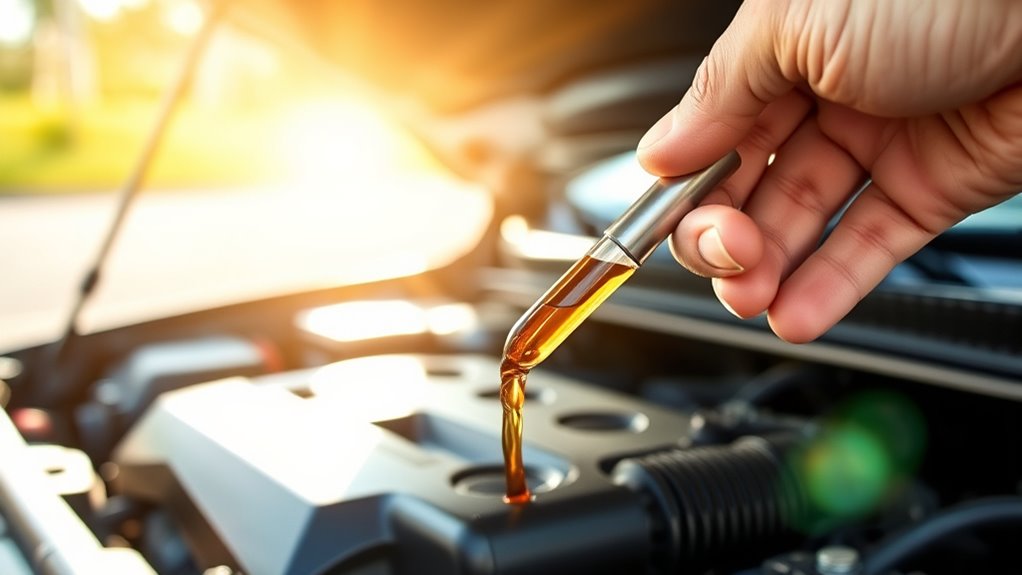
Before you check your engine oil, make sure your car is parked on a level surface and the engine is cool or has been off for at least 10 minutes. This step guarantees an accurate reading by allowing the oil to settle in the oil pan. If the engine is hot, you risk burns and inaccurate measurements.
As part of regular vehicle maintenance, checking your oil helps you spot issues early and keeps your engine running smoothly.
You’ll also want to be aware of the engine oil types suitable for your car: synthetic, conventional, or blends. Each affects engine performance differently. Knowing your car’s recommended oil type helps you assess whether the current oil is appropriate or needs changing.
Getting your car ready properly sets the foundation for a precise oil level check and supports overall engine health.
Locate the Engine Oil Dipstick Easily
You’ll want to start by finding the engine oil dipstick. It usually has a brightly colored handle, so it stands out. You’ll often find it near the front or side of the engine, which makes it easy to reach. Knowing where to look can make checking your oil level quick and hassle-free.
Finding The Dipstick
Although engine compartments can look overwhelming, locating the dipstick is usually straightforward once you know what to look for. The dipstick typically has a brightly colored handle, often yellow or orange, making it easier to spot.
Pull it out gently to check your oil level. Don’t let engine oil myths confuse you; the dipstick is your most reliable tool for evaluating your oil. Remember, the dipstick helps you confirm if you have the right oil amount, but oil type considerations, like viscosity, depend on your vehicle’s specifications rather than the dipstick itself.
Before you begin, make sure the engine is cool and your car is on level ground. This simple step ensures your dipstick reading is accurate and helps maintain your engine’s health.
Common Dipstick Locations
Since dipstick locations vary by vehicle make and model, knowing common spots can save you time and frustration. For effective car maintenance and to guarantee perfect engine performance, it’s important to locate the dipstick quickly. Typically, you’ll find it near the engine block, often marked with a brightly colored handle.
Here’s a quick guide to common dipstick locations:
| Vehicle Type | Dipstick Location | Handle Color |
|---|---|---|
| Sedan | Near front engine | Yellow or orange |
| SUV | Side of engine block | Bright yellow |
| Pickup Truck | Toward engine rear | Bright orange |
| Hybrid/Electric | Under hood, less visible | Yellow or red |
Knowing these spots helps you maintain your engine’s health and performance with ease.
Remove and Clean the Engine Oil Dipstick Properly
Once you find the dipstick, go ahead and pull it out carefully. Then, grab a clean cloth and wipe off all the oil on it completely. Before you check the oil level, take a quick look at the dipstick to make sure there’s no damage or wear.
Locate The Dipstick
Before you can check your engine oil level accurately, you need to locate the dipstick, which is usually marked with a bright handle for easy identification. Typically, it’s positioned near the front of the engine, often yellow or orange to stand out. Once you find it, gently pull it out to inspect.
Knowing the right engine oil types and engine oil brands recommended for your vehicle helps guarantee you maintain proper oil quality after checking. If you’re unsure, consult your owner’s manual for guidance on suitable oils.
Don’t confuse the dipstick with other engine components. Focusing on the marked handle will save time. Properly locating it is essential before you proceed to remove and clean the dipstick for an accurate oil level reading.
Wipe Off Oil
After locating the dipstick, pull it out carefully and grab a clean, lint-free cloth or paper towel. Wipe off all the oil from the dipstick to guarantee an accurate reading. Oil viscosity changes with engine temperature, so wiping the dipstick clean helps you assess the oil’s true level and condition. A clean dipstick also prevents old oil from skewing your inspection.
Use these steps to wipe off oil properly:
- Hold the dipstick firmly to avoid dropping it.
- Remove every trace of oil with a smooth, even swipe.
- Check that no lint or debris remains on the dipstick.
- Keep the cloth dry to avoid contaminating the oil sample.
This careful cleaning sets you up for a precise oil level check on your next step.
Inspect For Damage
While cleaning the dipstick thoroughly, take a close look for any signs of damage such as cracks, bends, or corrosion that could affect its accuracy. Damaged dipsticks can give false readings, leading to improper engine oil levels, which may harm your engine.
If you notice any imperfections, consider replacing the dipstick to maintain precise measurements. Regularly inspecting the dipstick is a vital part of car maintenance and guarantees your engine runs smoothly.
During your engine inspection, don’t overlook this simple step. It helps prevent costly repairs down the line. Keeping the dipstick in good condition supports accurate monitoring of your engine oil level, protecting your vehicle’s performance and longevity.
Always handle the dipstick carefully to avoid bending or damaging it during checks.
Check the Engine Oil Level Against the Markings
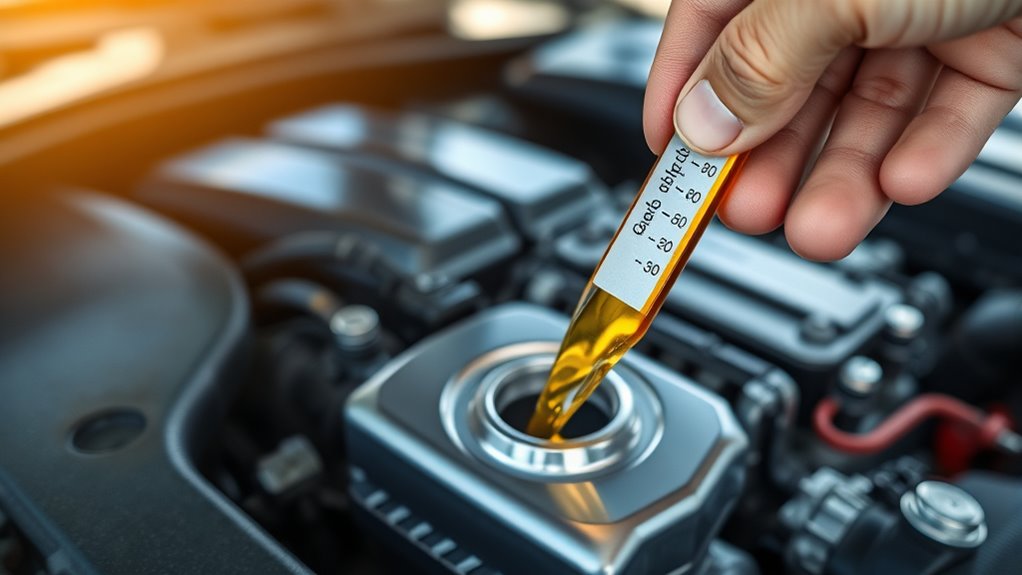
Once you’ve removed the dipstick, wipe it clean with a cloth or paper towel so you can get an accurate reading. Next, fully reinsert the dipstick and then pull it out again to check the oil level. The dipstick has markings, usually labeled “Min” and “Max” or with crosshatch patterns, to guide you. Your engine oil level should sit between these marks to ensure proper lubrication.
Keep in mind, the engine oil composition and oil viscosity affect the reading, so make sure you’re using the recommended oil type for your vehicle. If the oil is below the minimum mark, you need to add oil promptly to avoid engine damage.
Visualize the dipstick with a clear oil film between the marks, oil’s smooth, slightly thick texture, absence of bubbles or irregularities, and oil level steady without gaps.
Checking oil level accurately helps maintain engine health and performance.
Check the Engine Oil’s Color and Consistency
Although checking the oil level is essential, you should also examine the oil’s color and consistency to assess its condition. After pulling out the dipstick, look closely at the oil on it. Fresh oil usually appears amber or light brown and has a smooth, slick texture.
If the oil looks dark, gritty, or has a burnt smell, it’s a sign that it’s time for a change. Contaminated oil can clog the oil filter, reducing its efficiency and potentially harming your engine.
Make sure you check the oil when the engine is warm but turned off, as the engine temperature affects oil flow and appearance. Cold oil might not show its true condition.
Add Engine Oil Safely If the Level Is Low
If you notice the oil level is low after checking its color and consistency, you’ll need to add oil to avoid engine damage. Adding oil safely means you should first park your car on a level surface and let the engine cool down.
Next, select the right oil container. Look for one labeled with the recommended oil type for your vehicle.
When adding oil safely, follow these steps:
- Clean the area around the oil filler cap to prevent dirt from entering the engine.
- Use a funnel to pour oil slowly and avoid spills.
- Add small amounts, checking the dipstick frequently to avoid overfilling.
- Securely replace the oil cap after filling.
How Often Should You Check and Change Your Engine Oil?
You should check your engine oil at least once a month to guarantee proper levels and quality. Regular checks help you spot leaks or oil degradation early, preventing engine damage.
Regarding oil change intervals, follow your vehicle manufacturer’s recommendations since they vary based on engine oil types and driving conditions. Conventional oils typically require changes every 3,000 to 5,000 miles, while synthetic oils can last up to 7,500 or even 10,000 miles.
If you use your car for frequent short trips, towing, or in extreme temperatures, consider checking and changing oil more often. Using the right engine oil type is essential for maximum performance and longevity, so always choose the one specified in your owner’s manual.
Frequently Asked Questions
What Type of Oil Is Best for My Car’s Engine?
You should choose the oil viscosity recommended in your car’s manual, as it matches your engine’s needs. Thinner oils flow better in cold weather, while thicker oils protect at high temperatures.
Look for oil additives that boost performance, like detergents and anti-wear agents, since they keep your engine cleaner and running smoothly. Using the right viscosity with quality additives helps your engine last longer and perform efficiently.
Can I Drive My Car With Low Engine Oil?
Driving with low engine oil is like running a marathon with no water. You’re risking serious damage. You shouldn’t do it because oil level maintenance is essential for keeping your engine lubricated and cool.
Ignoring warning signs like the oil pressure light or unusual engine noises can lead to costly repairs. Instead, top up your oil promptly to avoid turning a simple issue into a mechanical nightmare.
What Causes Engine Oil to Become Dirty Quickly?
You’ll notice your engine oil gets dirty quickly mainly because of oil contamination from dirt, soot, and fuel mixing with the oil. When contaminants build up, they cause filter clogging, which reduces the oil’s ability to lubricate and clean your engine.
Driving in dusty conditions or short trips that don’t let the engine reach full temperature can speed this up. Regular oil changes help prevent these problems and keep your engine running smoothly.
How Do I Dispose of Used Engine Oil Safely?
You should never pour used engine oil down drains or on the ground. Instead, collect it in a clean, sealed container to prevent contamination.
Take it to a local oil recycling center or an auto shop that accepts used oil. This guarantees proper disposal and helps protect the environment.
Can Synthetic Oil Improve Engine Performance?
Oh sure, synthetic oil won’t turn your car into a rocket, but it does boost engine efficiency in ways you’ll actually notice. You’ll enjoy synthetic benefits like better lubrication, reduced friction, and improved temperature stability.
These perks help your engine run smoother and last longer, so you get more performance without the drama. So yes, switching to synthetic oil can definitely improve how your engine performs day to day.
Conclusion
Checking your engine oil might seem simple, but it’s surprising how often it’s overlooked until the car won’t start. By following these easy steps, you not only avoid costly repairs but also extend your engine’s life.
Just like catching a small leak before it floods, a quick oil check can save you time and money. So, make it a habit to check your oil regularly. You’ll thank yourself down the road for taking the time to check your car engine oil level.